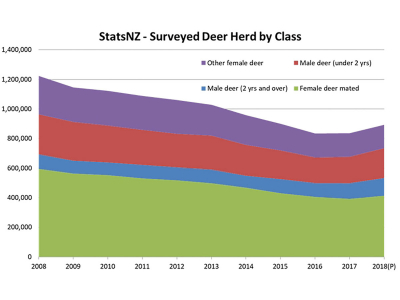
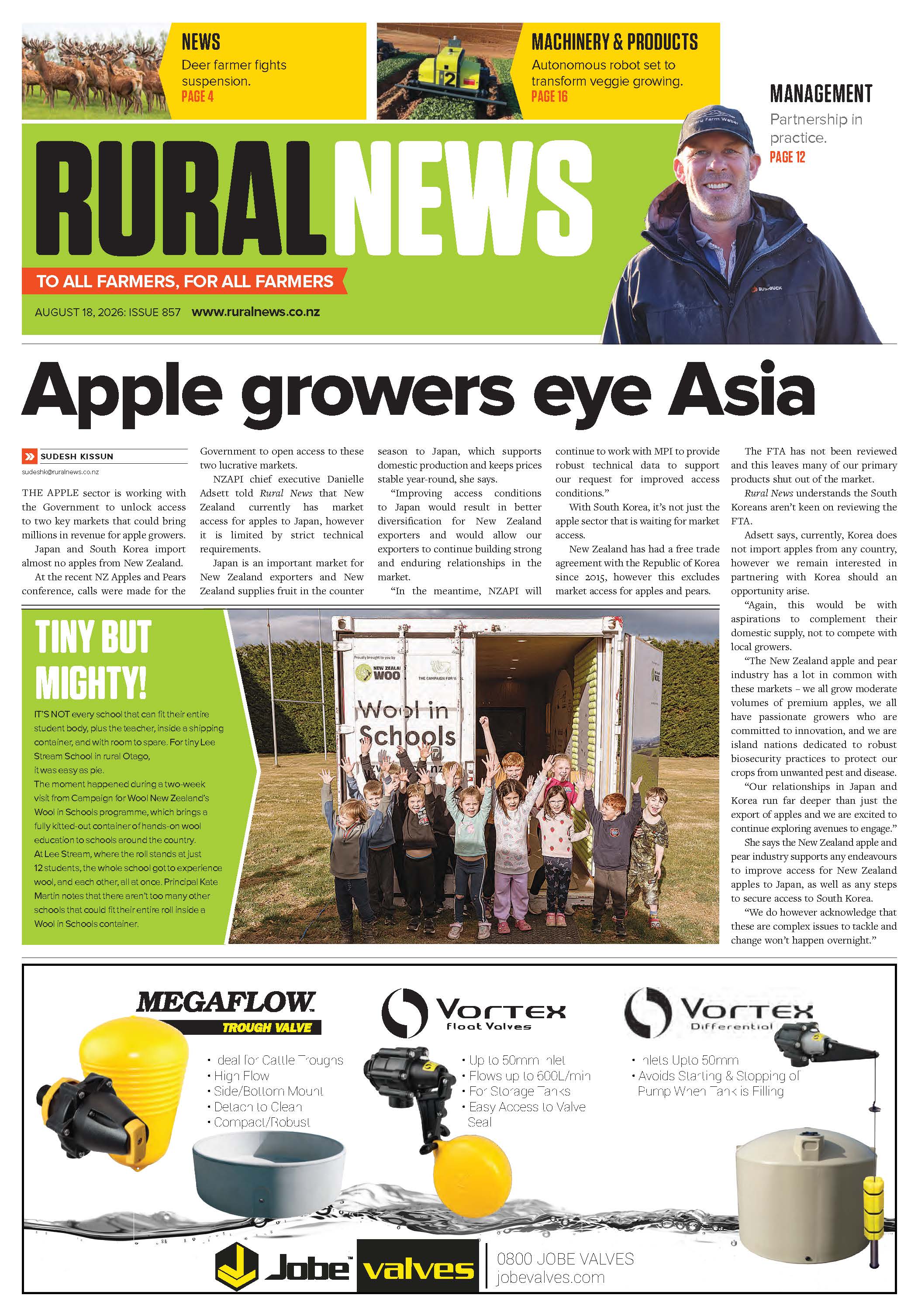
Farmed deer numbers, including breeding hinds and fawns, increased in 2018, says Statistics New Zealand.
This follows a small recovery in stag numbers in the 2017 census.
Deer Industry NZ (DINZ) chief executive Dan Coup says the trend is a strong indication of growing farmer confidence in the viability of deer in a drystock farming operation.
Hind numbers in the year to June 30, 2018 recovered to 413,400 from a low of 392,300 in 2017, according to provisional figures.
“This is the first firm indication that the long-run decline in deer numbers that began in the late 1990s has ended and that a recovery is underway,” he says.
“Even more interesting is that the statistics indicate a dramatic increase in hind productivity. Farmers reported that 84% of hinds weaned a fawn in 2018, compared with fewer than 73% in 2008.”
Coup believes this increase probably reflects the efforts farmers have been putting into improving hind nutrition and management.
“It also means deer farming, along with strong product prices, is able to compete better with alternative land uses. This has been a key objective of Passion2Profit, the deer industry’s Primary Growth Partnership programme.”
The 2018 increase in hind numbers of about 5% is seen by DINZ as sustainable if it continues in coming years.
“If this growth rate continues, it’s one that our venison markets should be able to handle. By and large it is coming from the expansion of herd numbers on existing deer farms and to a lesser extent from newcomers to the industry.”
Coup says the industry does not expect to see a large influx of new deer farmers.
“Modern deer farming is a specialist business,” he explains. “To successfully farm deer you need to make a significant investment in fencing, facilities and skilled staff.
“Velvet harvesting facilities need to meet the high standards of world markets.”
He adds that the modern generation of deer farmers are highly skilled deer managers and savvy business people.
“They share information and experience and most of them have close working relationships with their venison marketers and velvet buyers.”