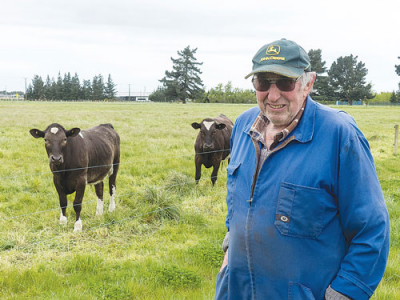
Rolleston farmer Ivan Robertson describes being caught up in the Mycoplasma bovis containment effort as a “pain in the butt”.
Robertson has 19 two-year-old beef steers – bought as store cattle – which are under the MPI testing regime after it tracked them down through the NAIT system.
He now understands they were born on a farm adjacent to one directly affected by the North Otago outbreak. As calves they went to a rearer, who sold them to another farmer before Robertson bought them on June 6 for finishing.
Robertson was contacted by MPI on August 31 and an Asure Quality vet took blood samples and nasal swabs on September 12. That result came back negative about the time MPI announced, on October 12, its decision to go for complete eradication of the disease by culling.
However, the standard regime required another two tests before the steers can be finally cleared, and a second set of samples was taken last week.
Robertson says it’s a “pain in the butt” keeping the steers separate from other stock. It was only luck that they had not been in contact with any other cattle before he was contacted by MPI. An adjacent paddock growing shaggy was unable to be grazed and he reluctantly faced having to mow it for silage.
Describing himself as “not quite a lifestyler, but semi-retired,” the former dairy farmer has three small blocks in the Rolleston area. He had moved the steers from one block to another, but observed biosecurity rules including disinfecting his yard and truck.
But Robertson is critical of MPI in not keeping him informed and says he had not been put under restrictions “as such”.
He says MPI’s communication had been very poor. “While they’re not telling me anything I’ve quarantined myself, to be fair.”
Robertson says he bought the animals at 400kg for about $1100 each and was hoping they’d now fetch $1500 to $1600.
He’s still unsure what he will be allowed to do with them, but is hoping to get them to the works very soon.
“Normally they’d be going to the works very shortly, the best of them, and the rest of them by Christmas.”
The Alliance meat company shareholder had attended one of Alliance’s roadshow meetings, where he called on the co-operative to push for eradication of Mycoplasma bovis. He has welcomed the MPI decision to opt for culling.
“I think it’s the right thing to do. While they’ve got it contained down there I think they should clean it out.”