
Feds Back National’s 19 Farming National Standards
National’s pledge to introduce 19 new national standards shows the party is serious about getting Wellington out of farming, Federated Farmers says.




 increase font size
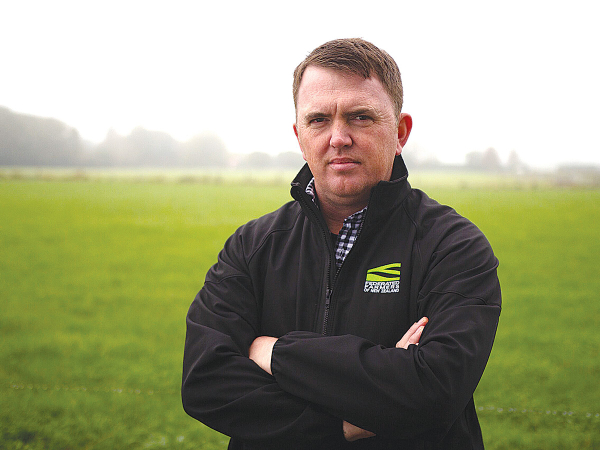 Federated Farmers president Wayne Langford
Federated Farmers president Wayne Langford says Greenpeace has shown itself as an anti-farming lobby by criticising Fonterra’s new on-farm emissions targets.
Fonterra’s targets, released last weeks, would see the co-operative plan to reduce their emissions intensity by 30% by 2030.
“These are ambitious and credible targets that have been designed using the internationally recognized and independent Science Based Target initiative,” says Langford.
The Science Based Target initiative helps companies set clearly defined and scientifically robust plans to reduce emissions in line with the Paris Agreement goals.
However, Greenpeace last week claimed Fonterra’s targets amounted to little more than “polishing a turd”, saying the co-operative’s proposed climate roadmap contained no real measures to reduce emissions.
“Fonterra is New Zealand’s biggest climate polluter and has the third highest methane emissions of all dairy companies in the world, but it wants us to accept that it can cut emissions through mythical technofixes and offsetting with grass and scattered trees,” says Greenpeace Aotearoa campaigner Christine Rose.
She says the co-operative’s use of a 2018 baseline for its targets is unambitious and inappropriate because this is when the dairy herd was near its peak.
She also claims the plan’s reliance on ‘novel solutions’ is wishful thinking and carbon capture from grass and trees is creative accounting.
“Once again, Fonterra is failing to take meaningful action on its huge contribution to climate change,” she says. “It’s one thing to announce on-farm emissions reduction targets in response to market demands, but without concrete action, targets are meaningless.”
Yet Langford says Kiwi farmers are already the most carbon-friendly in the world, and Fonterra’s targets ask them to go even further.
“True environmentalists should be welcoming such strong leadership from New Zealand farmers who are doing their best, but instead Greenpeace were the first to criticise,” he says.
“Nothing Fonterra could have announced would have been good enough for Greenpeace because they’re anti-farmer and anti-science.
“They’re totally fixated on an impractical plan to half the herd and to ban fertilizer, but that’s completely out of touch with what most Kiwis want,” he explains.
“New Zealanders liked Greenpeace a lot more when they stuck to saving whales. They should get back to that and stop slagging off our world-leading farmers,” he concludes.
National’s pledge to introduce 19 new national standards shows the party is serious about getting Wellington out of farming, Federated Farmers says.

Fonterra Co-operative Group chief financial officer Andrew Murray has resigned to take up a role outside the dairy giant.
Mobile phone coverage and reliability are deteriorating in rural areas, and farming families are bearing the cost, according to a Federated Farmers survey.
Four candidates have been confirmed for two director positions on Fonterra’s board.
A record farmgate milk price and strong global demand is laying the foundation for continued growth of organic dairy farming in New Zealand.


National’s pledge to introduce 19 new national standards shows the party is serious about getting Wellington out of farming, Federated Farmers says.
The National Party’s policies to make it easier to grow fresh vegetables, secure reliable water and energy and simplify farm planning are practical changes that will give growers the confidence to invest, according to Horticulture New Zealand (HortNZ).
Fonterra Co-operative Group chief financial officer Andrew Murray has resigned to take up a role outside the dairy giant.
A major move is about to get underway to improve the quality and viability of dairy beef and cattle in NZ.
Veterinarians say changes to the code of welfare for dairy cattle provides a positive foundation for improved cattle welfare across the country.
Today, 15 October, is the International Day of Rural Women, which recognises rural women’s contribution to farming, communities and the environment.



OPINION: The same mainstream media muppets that brought you Jacindamania in 2017 have been flat out pimping for the Opportunities…
OPINION: Your old mate reckons the atrocious way farmers in the UK are treated by their lords and masters in…