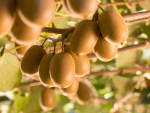
NZKGI Responds to Migrant Worker Exploitation Reports
Where any worker in the kiwifruit industry is mistreated, we expect the authorities to take action.




 increase font size
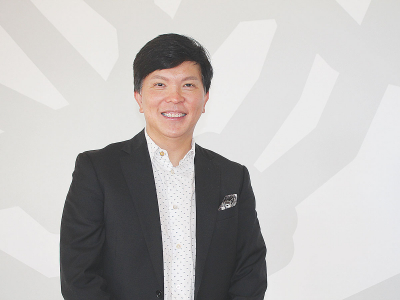 Singaporean blockchain entrepeneur Gary Loh was a keynote speaker at this year’s PMA A-NZ HortConnections conference in Melbourne held in July.
New Zealand and Australia have done “wonderful work” in their produce industries.
But after it leaves the farm or orchard it can get into the “messy middle”, says Gary Loh, a Singapore blockchain entrepreneur.
Loh says the “messy middle” can be anywhere between the farm and the consumer.
He’s had personal experience as former chief executive of fresh fruit company SunMoon Food Ltd, which he bought as a banker and had to completely turn around.
That experience led him to found DiMuto, a Singapore trade technology service company with a Track & Trace blockchain platform for the produce industry.
The “messy middle” needs to change, he says, and he wants to help solve the problems, he told this year’s PMA A-NZ HortConnections conference in Melbourne, attended by HortNews.
Disputes and problems in the “messy middle” can take 5-10% off the bottom line – they are the “pain point”.
“I had to talk to my finance team, I talked to my salesperson, I get to the shipping documents… and it all works in a manner where basically you have a barcode which doesn’t actually link it back to the documentation when you export. So you can see the batch but you can’t see the documentation.”
Examples of global trading problems include the needles-in-strawberry sabotage which happened mainly in Australia but affected export markets in Singapore, Malaysia, Thailand, Philippines and Vietnam.
Or documentation can be cleared by one government then not accepted by another.
Also, big retailers tell the little suppliers what to do but they all have different systems. Computer company consultants can be expensive just to sort out one problem with one product.
“This is the reality for us with global trade and it is such a pain for all of us.”
He says his business name DiMuto means “digital barter”, and with this we go back to the rule of the trade -- trust, he says.
“Every day I’d go to work and people tell me there’s a problem with an apple or an avocado and it is coming from different parts of the world. We needed to solve the four Ts – trace, track, transparent and trust.”
They saw the need for all records for the produce, from every box of fruit to all the documentation needed for that transaction, available in the cloud for everyone.
“I don’t have to go into your ERP (business process management software program) to see everything that you have done and you don’t have to go into my ERP to see what I have done. This is the basic background of what we have done.”
He says we need to close the loop. “That does not mean joining the growers to the retailers. It means being able to speak to the consumer.”
Closing the loop means being able “to take that apple, scan it and know whether it has a five star rating or not”.
Blockchain enables everyone to have the same record of transactions.
But many people are doing blockchain, he says. “We said ‘we want to be agnostic (not knowing) about what kind of blockchain you use’. We allow different systems to communicate on the platform.
“What are the benefits? It keeps track in large numbers, it is easy to verify what we see and it proves the error. One of the biggest problems, when I speak to people about blockchain, is they ask how can it error-proof the trade?
“One of the biggest problems in global trade is we could never prove the error. We did not know who, in which part of the chain, made that mistake. That was the fundamental basis of what DiMuto was trying to prove.”
It can tell you which box has the problem, Loh says.
He cites a case in his produce company of a consumer complaining about a spotty apple.
He was able to pinpoint where the problem lay, ie the retailer had not put the apples in the coolroom.
Where any worker in the kiwifruit industry is mistreated, we expect the authorities to take action.

Kiwifruit growers are watchful but remain optimistic as concerns around the potential effects of the El Niño weather pattern this season.
James Blair, an agronomist for AS Wilcox and the Pukekohe regional champion, has won the 2026 Young Grower national title.
Claimed to be the first autonomous robot for New Zealand vegetables growers, the first Kilter AX-1 unit has arrived in the country.
After delivering a strong financial year, rural trader PGG Wrightson says the coming months will depend on customer confidence and weather.



National’s much-touted free trade deal with India featured in the Rural Issues Debate at Mystery Creek, Hamilton on Wednesday night.

New Zealand's 2026-27 freshwater fishing season has opened, with anglers encouraged to head to rivers and lakes over the coming days as conditions look favourable across much of the country.
Central Otago District Council (CODC) has voted against a plan to spread treated sewage sludge from Cromwell and Alexandra on farmland near Lauder, a decision Federated Farmers says reflects strong opposition from rural residents.
Pāmu has released its FY26 Integrated Annual Report, reporting a Net Operating Profit of $113 million, more than double the $49 million recorded in FY25.
Meat Industry Association data, released alongside the Red Meat Sector conference in Wellington, shows export value climbing across the US, China, UK and Canada.
Applications are set to open for the 2027 Zanda McDonald Award, a trans-Tasman award recognised for identifying and fast-tracking talented young leaders in agriculture and agribusiness.



OPINION: The same mainstream media muppets that brought you Jacindamania in 2017 have been flat out pimping for the Opportunities…
OPINION: Your old mate reckons the atrocious way farmers in the UK are treated by their lords and masters in…




