
Beef + Lamb New Zealand Awards 2026 Winners Announced in Christchurch
Last night saw the winners of the 2026 Beef + Lamb New Zealand (B+LNZ) Awards named at a gala dinner at Te Pae Christchurch Convention Centre.




 increase font size

AN AGRESEARCH scientist has become the third at the institute to win a prestigious pastoral science award.
Emeritus Professor Syd Easton, who is based at the AgResearch Grasslands campus in Palmerston North, was awarded the Ray Brougham Trophy for his significant contribution to grassland farming.
The award was presented by the NZ Grassland Trust at the recent NZ Grassland Association conference. Trust chair, Gavin Sheath, made the presentation saying the award acknowledges 40 years of leadership in forage breeding and endophyte technology.
"Syd has made an important contribution in the understanding of endophyte and ryegrass interaction, through innovation and leadership," he says.
After graduating from Massey University, Dr Easton joined DSIR in 1970 as a researcher. He then won an NRAC fellowship to work in France and completed his PhD in plant quantitative genetics at the University of Paris.
Dr Easton's plant breeding achievement is marked by a succession of successful cultivars, some of them breaking new ground. He bred the first late-flowering New Zealand adapted perennial ryegrass cultivar that improved forage quality in late spring.
He also bred the first New Zealand lucerne cultivar that combined grazing tolerance and resistance to blue-green aphid and bacterial wilt; and tall fescue cultivars that have improved palatability and seedling vigour.
Dr Easton led a multi-disciplined endophyte research programme until his retirement in 2011. Within this programme, he made a key contribution to understanding the genetic interaction between the host plant and endophyte. He considers this work as the highlight of his career.
"Over a period of five years in the early 1980s everything changed in our field of work as we realised how important endophyte was," he says.
He also looks back at a career full of support and collaboration from stakeholders and farmers.
"This has been another highlight for me. I've been to other countries where very few people care about the work agricultural scientists do. In New Zealand we are blessed with highly supportive farmers and agricultural professionals who critique but also value and use our science.
"It is great to see our work at work on New Zealand farms."
Dr Easton also acknowledged the work of the NZ Grassland Association.
"They deserve a plug for the work they do bringing researchers, industry and farmers together in one forum. It is an important role in our industry," he says.
"I worked with Ray Brougham early in my career. I really value the memory of Ray, the man and his science. I am greatly honoured to receive this award in his name."
As in past years the Trust will be inviting Dr Easton to do a seminar series in mid-2014.
Last night saw the winners of the 2026 Beef + Lamb New Zealand (B+LNZ) Awards named at a gala dinner at Te Pae Christchurch Convention Centre.
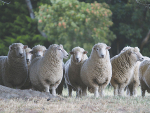
A significant breakthrough in understanding facial eczema (FE) in livestock brings New Zealand closer to reducing the disease’s devastating impact on farmers, animals, and rural communities.
A breakthrough in the understanding of Facial Eczema (FE) in livestock could bring New Zealand closer to reducing the disease’s impact.
An innovative idea for transforming mechanically deboned meat (MDM) into a meat flake for seasoning has taken top honours in the Meat Industry Association’s (MIA) first-ever Dragon’s Den competition.
The Government's plan to merge the seven crown institutes presents exciting possibilities for plant technology company Grasslanz Technology, says chief executive Megan Skiffington.


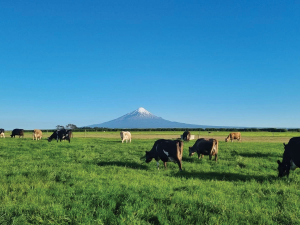
A spate of southerly winds bringing cold temperatures has presented challenges for Taranaki dairy farmers.
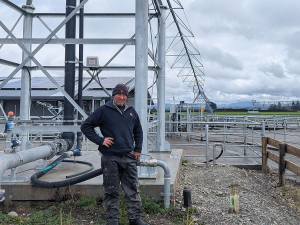
Converting a longstanding cropping farm to dairy was the only way to ensure the land stayed in the family long term, says new dairy farmer Rod May.
As the election heats up, Organics Aotearoa New Zealand (OANZ) has launched its election scorecard designed to help voters wanting to support policies that grow organic and New Zealand's organic sector.
A 'tsunami' of milk from key exporting countries is winding down and this may be good news for New Zealand dairy farmers.
Will the good times last? That's one of the key issues to come out of the latest Federated Farmers confidence survey.
Outgoing Fonterra Co-operative Council chair John Stevenson says that it has been a privilege to represent the co-op's farmer shareholders.




OPINION: The same mainstream media muppets that brought you Jacindamania in 2017 have been flat out pimping for the Opportunities…
OPINION: Your old mate reckons the atrocious way farmers in the UK are treated by their lords and masters in…




