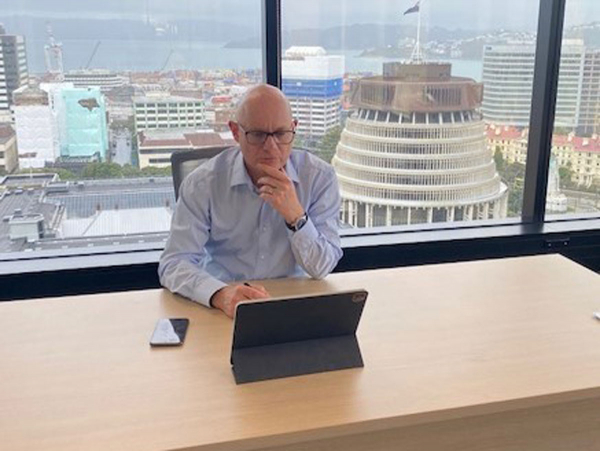
The productive and primary sector appears to be well placed to deal with the Alert Level Four settings according to the Director General of MPI, Ray Smith.
He says MPI's leadership team, alongside Minister O'Connor, held a zoom meeting with more than 180 primary sector leaders on Wednesday morning to discuss the change in alert levels. Smith says the turnout shows we have a highly professional sector who want to do the right thing. He says given the Delta variant is highly contagious, there was a focus on ensuring the sector can keep its workers safe while still producing food for Kiwis and export.
“I discussed the need for strong COVID-19 safety protocols including mask use at all times at work, maximising social distancing, regular temperature checks for staff and visitors. Also the use of bubbles for travel to work, avoiding congregating at break times, and the need to maximise safety at all times, ” he says.
Ray Smith says MPI is committed to supporting the industry through Alert Level 4 and will keep it updated should any changes be required. He says they also discussed who can operate at Alert Level 4. It was noted that butchers, green grocers and fishmongers can provide contactless delivery, but not open for customers.
“I want to thank the primary sector for, once again, stepping up at what is a challenging time and for showing leadership,” he says.
Ray Smith says under Alert Level 4 the following businesses can operate:
- Primary industries (food and beverage production for both domestic consumption or export, plus the relevant support services) and veterinary and animal health and welfare services. It also includes businesses transporting freight.
- Pest management services, key elements of pulp and paper plants and solid fuel.
- Services involved in diagnostics for critical businesses or services like biosecurity, food safety, or public health.