Fall Armyworm in NZ Maize: Four Years of Research
Four years since it was first detected in New Zealand, researchers and growers now know much more about management of maize pest fall armyworm (FAW).




 increase font size
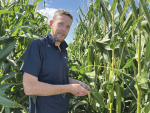
 Grasses being developed by AgResearch scientists are expected to result in healthier animals, better production on the farm and less impact on the environment.
Grasses being developed by AgResearch scientists are expected to result in healthier animals, better production on the farm and less impact on the environment.
Dr Tony Conner, the Forage Science Group Leader at AgResearch and one of New Zealand’s leading plant scientists, spoke today about the cutting edge research into enhanced ryegrass at the annual NZ Grassland Association (NZGA) conference in Timaru.
A recent grant from the Ministry of Business, Innovation and Employment’s Endeavour Fund, along with funding from AgResearch and other stakeholders, means an investment of $25 million over five years into the genetically modified forages research.
“What we are doing is enhancing the ryegrass so that there is more energy and nutrition stored in the grass,” Conner says.
“This means the animals feeding on it are healthier, and therefore they become better producers for the farm. The result will be a major boost for the agricultural economy.”
“What we are also finding is that a by-product of these changes to the grass will be important gains as far as the impacts on the environment. This includes less methane gas produced by the animals, and the change in nitrogen requirements with these grasses could reduce nitrate runoff.”
Conner says the NZGA conference is timely given the important work that AgResearch and other organisations are doing in the area of forage science, and the gains being made in this sector. He says there is much benefit for New Zealand in building upon the DairyNZ Forage Value Index and the future vision of the emerging Pastoral Industry Forage Strategy.
“We are mindful of the need to continue strong working relationships in this sector, including the scientists and its many stakeholders, so that our advances are relevant to industry. The NZGA conference provides a key opportunity.”
The conference runs until Friday.
Four years since it was first detected in New Zealand, researchers and growers now know much more about management of maize pest fall armyworm (FAW).
Generative AI in the workplace, trials in the field, and industry-relevant research took centre stage at this year’s Grape Days events in Central Otago, Hawke’s Bay and Marlborough.
How to save soil, living with kikuyu grass and retaining nutrients on farm.
Last night saw the winners of the 2026 Beef + Lamb New Zealand (B+LNZ) Awards named at a gala dinner at Te Pae Christchurch Convention Centre.
A significant breakthrough in understanding facial eczema (FE) in livestock brings New Zealand closer to reducing the disease’s devastating impact on farmers, animals, and rural communities.


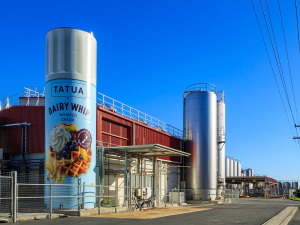
Waikato milk processor Tatua has again declared a record milk payout to farmer shareholders, leaving other processors in the dust.

A Labour-led Government won’t be bringing back the controversial freshwater rules of 2020.
National’s much-touted free trade deal with India featured in the Rural Issues Debate at Mystery Creek, Hamilton on Wednesday night.
New Zealand's 2026-27 freshwater fishing season has opened, with anglers encouraged to head to rivers and lakes over the coming days as conditions look favourable across much of the country.
Central Otago District Council (CODC) has voted against a plan to spread treated sewage sludge from Cromwell and Alexandra on farmland near Lauder, a decision Federated Farmers says reflects strong opposition from rural residents.
Pāmu has released its FY26 Integrated Annual Report, reporting a Net Operating Profit of $113 million, more than double the $49 million recorded in FY25.





OPINION: The same mainstream media muppets that brought you Jacindamania in 2017 have been flat out pimping for the Opportunities…
OPINION: Your old mate reckons the atrocious way farmers in the UK are treated by their lords and masters in…