
Ballance Farm Environment Awards Launch on West Coast
The Ballance Farm Environment Awards are coming to the West Coast of the South Island.




 increase font size
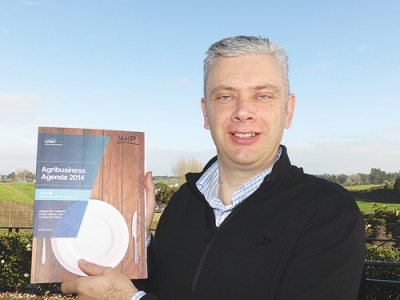 KPMG’s global head of agri Ian Proudfoot.
New Zealand should start looking at creating specific food products which meet the special and unique needs of the elderly, the young and those of specific religious faiths.
That was one of the key themes of an address by KPMG’s global head of agri, Ian Proudfoot, to last week’s Beef + Lamb NZ Ag-Innovation conference in Palmerston North. He told the conference that by the year 2050, 3.9 billion people will be eating in accordance with strict religious protocols – people of the Islamic, Buddhist, Hindu and Jewish faiths.
He says the key thing about religious dietary rules is that they are strict and there is not a lot of flexibility within those rules.
“If NZ can innovate products to take to market that enhance the eating experience of a member of a religious faith and still comply fully with their religious orders, then there is a real opportunity to create new niche markets,” Proudfoot explained. “This could see us effectively getting a supported position from the faith to eat a particular product.”
He gave as an example faiths that require followers to be vegetarian. “What can we do in terms of innovative vegetables and solutions that would enable us to present something that nobody else is bringing to market?” he asks.
Proudfoot says NZ stands to lose a sizeable chunk of business if it just keeps on doing what it is doing now. He believes there is an exciting opportunity to develop innovative high-value proteins that still comply with religious requirements and give us a market advantage.
And there is a similar opportunity to create particular foods for the ever increasing aging population. Food scientists and research funders need to focus on the specific needs and requirements of the elderly, Proudfoot says.
How will the elderly eat? he asks. “They don’t need as many calories because they are not so active, and they don’t necessarily want food that’s difficult to chew. If we can match their tastes and provide excitement in their lives with a new product, that would benefit them and us.”
Environment key
In his presentation to the Ag-Innovation seminar, Proudfoot stressed the importance of farmers and all those in the agriculture sector fully embracing environmental issues.
He says doing the bare minimum in respect of the environment is no longer acceptable, nor is complying with environmental regulations just because the rules say so.
“We should do the right thing because it is the right thing to do. We need to do what’s right openly with pride, and position our country in a such a place that no other country will be able to challenge us.”
Proudfoot says a mindset change is needed and a huge step away from where we have been in the past.
Chasing Gen Y
Food, like wine, is a fashion, says Proudfoot, who thinks that New Zealand, as a food producer, must be up to the challenge.
He comments that attention spans of young people are pretty short these days, so there is a need to match the food fashion trend.
He points to the fashion industry as an example, where there is a constant need for innovation as the life cycle of a product may be short.
“If producers don’t do this, their sales will suffer,” Proudfoot explains. “I think we are going to move to a position where the focus will be on next best flavour or the next exciting innovation coming through in a food solution being presented to the market. This means having to bring out something new just to keep consumers engaged with your products. That’s a reality.”
With that trend, Proudfoot believes NZ’s innovation system needs to change. “Everything has to start with the consumer.”
The Ballance Farm Environment Awards are coming to the West Coast of the South Island.

New Zealand wool is reaching new heights as air filtration companies move away from synthetic products to biodegradable alternatives.
There's been widespread support from the primary sector for the Government's announcement on changes to freshwater farm plans that come under the Natural Environment Bill, which is now set to replace the existing RMA.
The chair of the country's environmental regulator, the Environmental Protection Authority (EPA), says changes are already under way to improve the performance of the agency to better meet the needs of those who interface with them.
New Zealand's Emissions Trading Scheme (NZ ETS) encourages afforestation while not achieving climate goals, says a new report released by the Parliamentary Commissioner for the Environment, Simon Upton.


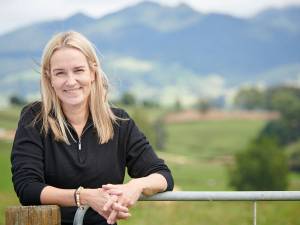
Minister of Conservation Hon Tama Potaka has appointed Susan O'Regan as Chair of the Queen Elizabeth II National Trust (QEII) for a three-year term.
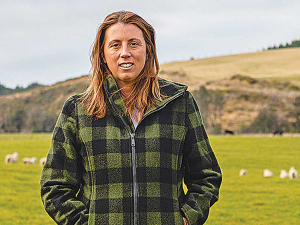
Red meat farmers are welcoming Labour’s plan to review the Emissions Trading Scheme and not to campaign on pricing agricultural emissions.
Where any worker in the kiwifruit industry is mistreated, we expect the authorities to take action.
Mid Canterbury Federated Farmers arable chair, Bevan Lill, said Beef + Lamb NZ data indicated that for the last six years, the average arable return on investment was about 0.8% while inflation ran about 4% - so the average arable farm was going backwards at about 3% a year.
Seed and grain companies share the concerns of arable farmers about the viability of their sector, says Seed and Grain New Zealand chief executive Dr Sarah Clark.
The New Zealand Institute of Forestry (NZIF) says unnecessary changes to New Zealand’s Emissions Trading Scheme (NZ ETS) will seriously erode investor confidence and result in significant reductions in forest planting rates.



OPINION: The same mainstream media muppets that brought you Jacindamania in 2017 have been flat out pimping for the Opportunities…
OPINION: Your old mate reckons the atrocious way farmers in the UK are treated by their lords and masters in…




