
New Rural Recycling Scheme to Replace Voluntary Farm Plastics Programmes by 2027
Environment Minister Nicola Grigg has announced details of a new rural plastics recycling scheme.




 increase font size
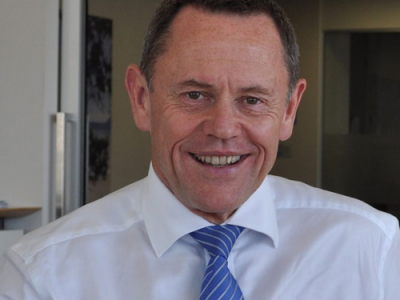 Simon Upton.
A significant win for agriculture and science-based theory on climate change is how the Parliamentary Commissioner for the Environment’s (PCE) latest report is being described.
But Climate Change Minister James Shaw is digging his toes in.
Commissioner Simon Upton’s new report suggests that forestry carbon sinks should only be used for offsetting biological emissions like methane. Carbon emissions from, for instance, fossil fuels should be brought to zero by other means. This would demand a major rethink of the proposed ETS ‘reforms’ which allow forestry credits to be traded to offset all emissions.
The PCE report suggests an alternative approach to the Government’s current plans. Upton’s approach would tackle carbon dioxide – the main driver of climate change – as the key priority. He suggests:
- Fossil emissions be managed down to zero by the second half of the century, separately from biological emissions and forest sinks.
- While biological emissions would need to be reduced, that would not be to zero because of their shorter lifetime in the atmosphere. Biological emissions could also be offset with forest sinks.
- This approach more closely aligns the duration of the warming impact of these emissions and the duration of forest sinks that offset these emissions.
- That the forestry sinks for offsetting carbon emissions should be for biological emissions only.
However, Shaw says the Government won’t be deviating from its planned changes to the ETS, which include using forestry to offset all emissions.
“The commissioner’s report questions some of the fundamental design principles of the New Zealand Emissions Trading Scheme (NZ ETS),” says Shaw.
“However, for the sake of providing policy stability and predictability for emitters and the forestry sector, the Government is committed to retaining the use of forestry offsets for carbon dioxide and other greenhouse gas emissions.”
He says the Government’s proposed reforms are the result of five years consultation and discussion and any changes would take that amount of time.
But farming organisations say the Government must take note of the new findings which align with the latest and emerging science.
Beef + Lamb NZ chairman Andrew Morrison says it is now essential that ministers considering the shape of the Zero Carbon Bill, and members of the Interim Climate Change Committee and the future Climate Change Commission, take the parliamentary commissioner’s findings into account when setting policy.
Federated Farmers believes the report puts the challenge out to the Government to let science -- rather than politics -- guide its policy planning.
“We’re delighted that the PCE joins the growing list of agencies, scientists and environmental commentators who recognise the fundamental difference between the permanent conversion of inert, long-term fossil fuels into carbon dioxide and shorter-term biological emissions from livestock (methane and nitrous oxide),” says Feds vice-president and climate change spokesperson Andrew Hoggard.
Hoggard says that Upton recognises the fundamental point that it is carbon dioxide that is the main driver of rising global temperatures.
BLNZ says the report shows a clear way forward for NZ on climate change.
Morrison says the PCE has recommended a science-based approach which fits with the principle of each sector being responsible for its own emissions, and for tackling them. Different sectors should not be able to offload the impact of their emissions onto other sectors, says Morrison.
DairyNZ chief executive Tim Mackle has welcomed the recommendation that methane should be treated differently from carbon dioxide and doesn’t need to be reduced to net zero.
“This work adds to the growing evidence base developed over the past few years about how methane -- a biological emission from animals -- differs from carbon dioxide in its impact on global warming,” says Dr Mackle. “The paper states that methane needs to be reduced and stabilised in order to achieve no additional warming, rather than go to net zero. This is consistent with the international science.
“Mr Upton also recommends that nitrous oxide does not need to be reduced to net zero. We would welcome further research into this approach,” Mackle adds. “This paper demonstrates again how the science on the impact of biological gases on global warming is continuing to develop. This is why the implications of any policy decisions for dealing with these gases needs to be carefully considered. But it is clear that total emissions must reduce.”
Many scientists have recently supported the setting of a separate methane target in the Zero Carbon Bill, to reduce and stabilise methane while carbon dioxide and nitrous oxide reduce to net zero. This is aligned with work by the Productivity Commission, research by Dr Andy Reisinger of the NZ Greenhouse Gas Research Centre, and most recently by Professor Myles Allan, of Oxford University, a member of the Intergovernmental Panel on Climate Change (IPCC).
Environment Minister Nicola Grigg has announced details of a new rural plastics recycling scheme.

For the first time in a quarter of a century, Federated Farmers has something positive to say about the Labour Party’s climate change policy leading into a general election.
The Ballance Farm Environment Awards are coming to the West Coast of the South Island.
Climate, nature and animal wellbeing make up Fonterra's refreshed sustainability roadmap released last week.
There's been widespread support from the primary sector for the Government's announcement on changes to freshwater farm plans that come under the Natural Environment Bill, which is now set to replace the existing RMA.


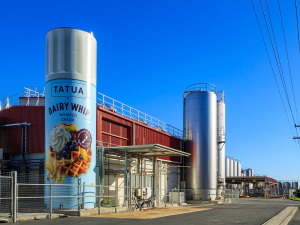
Waikato milk processor Tatua has again declared a record milk payout to farmer shareholders, leaving other processors in the dust.
A Labour-led Government won’t be bringing back the controversial freshwater rules of 2020.
National’s much-touted free trade deal with India featured in the Rural Issues Debate at Mystery Creek, Hamilton on Wednesday night.
New Zealand's 2026-27 freshwater fishing season has opened, with anglers encouraged to head to rivers and lakes over the coming days as conditions look favourable across much of the country.
Central Otago District Council (CODC) has voted against a plan to spread treated sewage sludge from Cromwell and Alexandra on farmland near Lauder, a decision Federated Farmers says reflects strong opposition from rural residents.
Pāmu has released its FY26 Integrated Annual Report, reporting a Net Operating Profit of $113 million, more than double the $49 million recorded in FY25.





OPINION: The same mainstream media muppets that brought you Jacindamania in 2017 have been flat out pimping for the Opportunities…
OPINION: Your old mate reckons the atrocious way farmers in the UK are treated by their lords and masters in…




