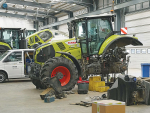
Tractor, harvester IT comes of age
Over the last halfdecade, digital technology has appeared to be the “must-have” for tractor and machinery companies, who believe that bringing IT to tractors and farming will offer its customers huge benefits.




 increase font size
 Stuart Charters
TOO MANY information technology students are overlooking the technological needs and opportunities of the primary sector, even though career prospects are high and the potential for new discoveries with scientific and commercial value considerable.
While I don’t dismiss the value of IT in fields such as gaming or design, I worry about the possibility of an unfavourable distribution of students choosing educational programmes in these areas at the expense of advancing IT in the primary sector, especially considering the commercial relevance and importance of the land-based industries to New Zealand.
Although there is much scope for technological advances in farming, it’s also important to realise that the primary sector is much broader than this. It also involves areas such as supply chain management, environmental management, geographic information systems (GIS) and even accounting. It’s a multifaceted, multibillion dollar industry. As such, it’s an exciting time for primary industry IT.
As well as setting up the new department to put greater emphasis on IT for the land-based industries, recent qualifications reforms have seen Lincoln introduce an agritech major to its bachelor of science degree, a GIS and environmental informatics major to its bachelor of environment and society, and an information technology major to its bachelor of commerce.
Technological advances include the increasing use of mobile phone apps in precision agriculture, such as through the optimisation of irrigation systems.
There are many interrelated science and business considerations on the average farm, which means many commercial decisions of consequence have to be made regularly. This translates into opportunities in IT for optimising farm operations and the wider primary sector. More grads are needed to capitalise on the growing potential.
• Stuart Charters is head of department at Lincoln University’s newly established department of informatics and enabling technologies.
Over the last halfdecade, digital technology has appeared to be the “must-have” for tractor and machinery companies, who believe that bringing IT to tractors and farming will offer its customers huge benefits.
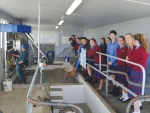
The first robotic milker in a southern hemisphere high school is running at Feilding High School, Manawatu.
Lincoln University students are scouring the country to discover new insect species and keep ahead of potential threats to agriculture and the environment.
An EIT foursome have achieved a first as the only students to win gold in New Zealand's Bragato Wine Awards.
The New Zealand horticulture Industry has created an integrated, robust and thriving foundation from which it is ready to “explode into future success”, says Waikato University student Jack Keeys.


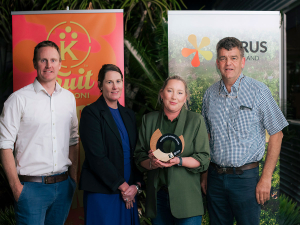
New Zealand's citrus growers were challenged to build their future on the value embedded in their fruit rather than the volume they produce, at Citrus New Zealand's annual gathering in Gisborne on 17 September.
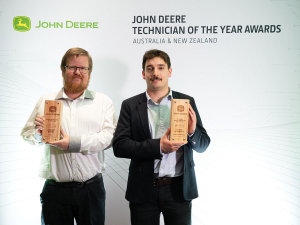
Leading John Deere technicians and apprentices from New Zealand and Australians were recognised at the recent sixth annual JD Technician of the Year Awards, held in Brisbane.
In Dacre, near Invercargill in New Zealand’s South Island, Bruce Dinnington is running a dairy operation unlike any other.
A free online platform aggregating governance vacancies across rural and regional New Zealand has been launched.
Environment Minister Nicola Grigg has announced details of a new rural plastics recycling scheme.
Agricultural drone operators say that a government decision to allow lower-risk drone work without certification won’t lower standards but drive innovation and efficiency.





OPINION: The same mainstream media muppets that brought you Jacindamania in 2017 have been flat out pimping for the Opportunities…
OPINION: Your old mate reckons the atrocious way farmers in the UK are treated by their lords and masters in…




