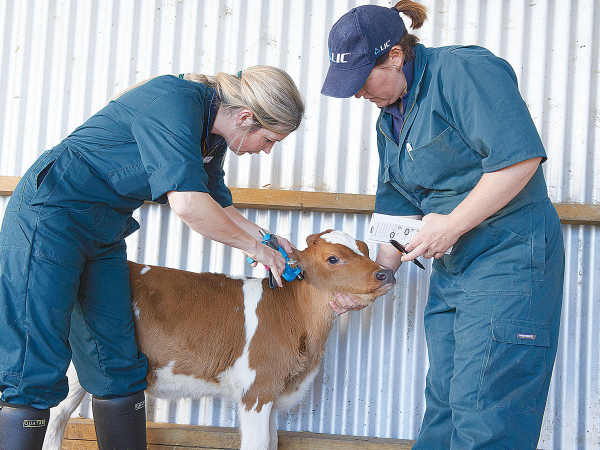
This calving season, LIC is offering a BVD test for newborn calves to provide farmers with an early indication on the health status of their valuable replacement stock.
Previously, farmers who were testing their calves for BVD through LIC were required to wait until calves were at least 35-days-old befor being able to confirm the BVD status of the newborns.
BVD is a common, highly infectious disease that reduces milk production and causes health and fertility problems. Estimates put the annual losses for dairy farmers at around $127 million a year.
The disease is spread by carriers, also known as persistently infected (PI) animals, who are born with the virus in their body.
Malcolm Ellis, LIC general manager New Zealand markets, says eliminating the the 35 day delay before being able to test a calf for BVD will significantly improve a farmer's ability to manage the disease as well as add a layer of convenience on-farm as a result of conducting the test at such a young age.
"PI animals can cause havoc on the health status of the wider herd. Knowing the BVD status of your calves as early as possible will significantly reduce the risk of them passing the virus on to the rest of the herd."
Ellis highlights an additional benefit of the new test is the ability to couple it with other tasks happening on-farm at the same time.
"For the sake of convenience and efficiency, tissue sampling calves for the BVD test can be combined with tagging ot disbudding."
The new BVD test for calves was successfully piloted last year with the product offered to a limited number of customers.
Ellis says the co-op is committed to using its capabilities to develop new products and services that drive long term customer value on-farm.
"Value for our farmer shareholders is at the heart of what we do. Our diagnostics product suit supports armers to produce the most sustainable and efficient animals."