Once-a-Day Calf Feeding: How Probiotics Boost Heifer Growth
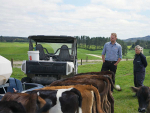
Matt Collier, Probiotic Revolution, says calves will drink a lot of milk once-a-day with their probiotic Calf Xtreme.




 increase font size
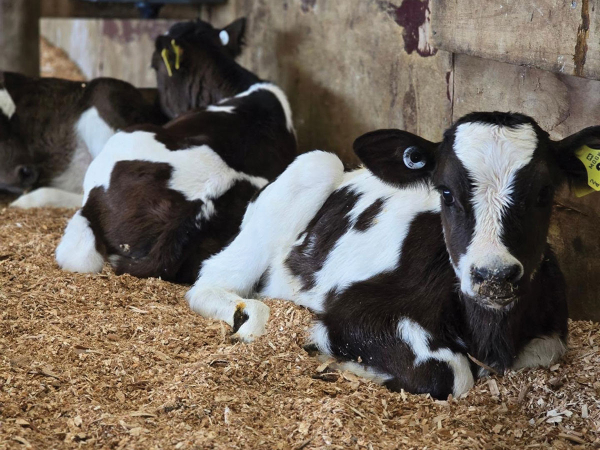 Additional benefits can be achieved by introducing probiotics before calving.
For decades, successful calving has centred on correct mineral supplementation to prevent milk fever, along with teat sealants to minimise calving mastitis.
According to Chris Collier of Probiotic Revolution, significant additional benefits can also be achieved by introducing probiotics before calving.
“With Superstart Lead Feed you are setting cows up exceptionally well for calving,” says Collier.
“It complements the traditional steps farmers already take, and much of the benefit comes from reducing the effects of sub-clinical ketosis.”
The impact of ketosis is obvious in a downer cow. The animal needs feed, but low blood glucose suppresses appetite. One treatment option is intravenous dextrose administered through the jugular vein. However, most ketosis cases are sub-clinical, where the effects are less visible but still damaging.
When milkfat demand suddenly increases around calving, body fat is mobilised into the bloodstream as ketones. If ketone levels rise too high, the liver cannot convert them efficiently into fatty acids for milk production, resulting in ketosis. Alongside pre-calving mineral supplementation, probiotics appear to provide a dual benefit — supporting immunity when cows are most vulnerable and increasing blood glucose levels approaching calving.
With an intentional restriction of pasture intake to avoid a high potassium intake, cows rely more heavily on high-fibre feeds such as hay, silage, or straw. Improved fibre digestion from probiotics helps lift blood glucose levels. With more available glucose, cows maintain appetite in the critical days before calving, giving them greater energy for calving and reducing retained membranes.
Farmers are seeing fewer difficult calvings as a result. Some have commented on how easily cows calve despite large calves or other complications. One Jersey farmer reported that after introducing Superstart Lead Feed, he has not needed a hospital mob for seven years.
Further health gains are also being observed through reductions in calving mastitis, foot issues, and metritis linked to lower levels of sub-clinical ketosis.
Collier has also seen cows return to cycling significantly earlier after calving, particularly where Superstart Lead Feed is followed by ongoing probiotic supplementation in the milking herd.
“If cows are not receiving a continued daily supply of beneficial bugs to support digestion, the effect fades quickly,” he says. “But when the programme continues after calving, increased feed intake and improved digestion help avoid the lingering effects of sub-clinical ketosis. Cows then cycle earlier and show stronger heats.”
One of the earliest examples came from a Taranaki farm where Superstart Lead Feed was delivered to springers through the water trough. Tail painting later showed that 95% of cows had cycled before the planned mating start date. When the vet checked the herd a week later, only 2.5% of cows required CIDRs.
Although conception and empty rates are influenced by multiple factors, earlier first heats mean more cows are submitted on their second or third cycle, improving conception outcomes overall.
Milton dairy farmer Chris Wills first introduced probiotics after calving in spring 2023 to address elevated somatic cell counts associated with dietary changes when cows left the wintering barn in late September. That season no CIDRs were required, and the herd’s three-week submission rate improved by 5%.
The following spring, Superstart Lead Feed was added to springers. Halter data later showed cows cycling on average just 24 days after calving, compared with the national average of around 42 days.
Collier believes the difference is too large to be explained by normal variation alone and instead reflects improved nutrition and metabolic health that support both milk production and early cycling. He has also observed situations where farmers stopped using Superstart Lead Feed on later-calving cows due to workload pressures. Early calvers cycled within 30 days, while later calvers extended beyond 30 days and experienced more calving and mastitis problems.
Although the most consistent intake of Superstart Lead Feed occurs when it is included in a transition diet on a feed pad, many farmers successfully administer it through springers’ water troughs, typically split into two or three doses daily.
Organic dairy farmers have shown strong interest because they cannot use teat sealants to control calving mastitis. Around 6000 organic cows are expected to receive Superstart Lead Feed via water troughs this year.
After four years transitioning to organic production, Wharepapa South dairy farmer Fraser Higham says a comprehensive probiotic programme — including Superstart Lead Feed for springers — has significantly reduced calving mastitis.
During the first two organic seasons, Higham was still able to use Teatseal. But in 2024, without it, the farm experienced 40 winter mastitis cases and 19 calving mastitis cases. In 2025, the 40 highest-SCC cows received a stronger probiotic at drying-off, resulting in a 75% reduction in winter mastitis. Following the introduction of Superstart Lead Feed, calving mastitis cases then fell by a further 50%.
Halfway through calving, the herd’s 10-day average SCC sat at 156,000, down from 260,000 the previous season.
For organic farmers, probiotics are proving a valuable alternative to conventional mastitis-control methods. But with additional benefits in reducing the impact of sub-clinical ketosis, probiotics are increasingly finding a place in mainstream dairy systems as well, with uptake of Superstart Lead Feed continuing to grow each year.
Matt Collier, Probiotic Revolution, says calves will drink a lot of milk once-a-day with their probiotic Calf Xtreme.
Somatic cell counts on the rise in late lactation?
Success in calf rearing is often measured by minimising health issues and achieving target weaning weights.
Success in calf rearing is often measured by minimising health issues, reducing mortality rates, and achieving high growth rates.
The company behind probiotic additive Calf Xtreme says around 450 dairy farms are successfully rearing calves with the help of the product.



Ravensdown shareholders have elected Jane Montgomery and Kate Acland to the Ravensdown Board for three-year terms, following a closely contested director election.
Federated Farmers says new legislation replacing the Resource Management Act will cut red tape, unlock investment and help grow New Zealand's export-led economy, after the Planning Bill and Natural Environment Bill passed their third reading in Parliament yesterday.
Leading figures from the major political parties will be questioned on their primary sector policies at the Rural Issues Debate at Mystery Creek Events Centre, Hamilton, on 30 September.
OPINION: Have a plan in place now!
Beef + Lamb New Zealand (B+LNZ) says it welcomes the passage of the Natural Environment Bill and Planning Bill, calling the bills a positive step for sheep and beef farmers.
A spate of southerly winds bringing cold temperatures has presented challenges for Taranaki dairy farmers.



OPINION: It seems Canterbury processor Synlait is still in the doldrums.
OPINION: Get offside with New Zealand First leader Winston Peters at your own peril.




