China No Longer Just A Commodity Story - Luxon
China remains New Zealand’s biggest market, taking $23 billion of our exports, but it’s no longer a commodity story, says Prime Minister Christopher Luxon.




 increase font size
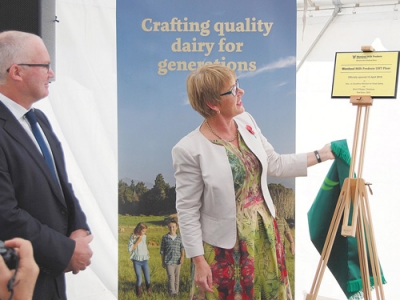 Food safety Minister Jo Goodhew unveils the plaque while Westland chairman Matt O’Regan looks on.
Adding value to New Zealand's dairy produce was the strong theme of the official opening of Westland Milk Products' new UHT plant at Rolleston last week.
Westland has hit the ground running with the $40 million plant, with commercial production underway and "substantial orders" already received. The company has hired its first overseas permanent staff, at an office in Shanghai, and plans to launch its UHT (ultra heat treated) long-life milk and cream in the Chinese market in June.
The plant, under construction since March 2015, was officially opened on April 15. A 3.6mMW LPG-fuelled boiler can process up to 14,000L/hour of white milk or 9000L/h of formulated whipping cream. Tetra Pak packaging lines fill containers ranging from 250ml consumer packs with built-in straws to 1000L commercial boxes.
The plant is Westland's first foray into producing and exporting liquid milk and cream, adding to its well-established milk powders. Chief executive Rod Quin calls it "a significant milestone in the company's strategy to move away from the volatile, and currently oversupplied, bulk dairy ingredient market".
"Our focus is now on producing high-profit, added-value products for the top end of the market."
Holding up a 250ml pack to guests at the opening, Quin said it would represent only 9-10 cents of 'commodity' milk to the farmer, but as UHT milk processed for the Chinese market would sell for $1.30 – a big gain even after marketing and distribution costs. Similarly, the company's 1L UHT whipping cream would sell in China for about $6.80.
"So that's our initial foray into UHT but it will not stop there," Quin said. "Part of the plant design is around a mixing unit mixing dairy and non-dairy components to then develop things like sports drinks, flavoured drinks and potentially aged nutrition. That's where the true added-value starts to flow."
Opening the plant, the Minister for Food Safety, Jo Goodhew, acknowledged a difficult time for dairy, in "a world awash with milk". But she assured guests the Government was working towards a goal of doubling NZ's export value by 2025.
"Free trade agreements are fantastic and we know dairy will benefit from the TPP, perhaps not as much as they wanted but there will be a significant benefit. Then you've got the non-tariff barriers and... the Government is focused on that too.
"Market expectations are for a product that is much more than a commodity. You are delivering.... Congratulations on [helping] us achieve our goal of doubling value by 2025."
Westland's chairman, Matt O'Regan, told guests the plant arose from a 2010 decision to improve shareholders' return through processing more milk – 18% now comes from Canterbury suppliers – and pursuing value-added projects, including a purpose-built nutrition plant at the Hokitika headquarters already producing 30,000 tonnes/year of infant formula, and the new Rolleston UHT venture.
"UHT processing is not new but quality milk and cream produced from NZ receives a premium in the Chinese market, and will lead us to work with our customers to develop UHT products for an ever-discerning consumer," said O'Regan.
Quoting Charles Darwin as saying it is neither the strongest nor the most intelligent of a species who survive, but the most responsive to change, O'Regan said the new plant was as significant as was Westland's first dryer producing milk powder in Hokitika 50 years ago.
"World commodity prices have fallen through the floor. Current returns to dairy farmers are unsustainable for our dairy industry to survive.
"In Europe last month we talked to many involved in the European dairy industry; I believe it will be 18-24 months before we see dairy prices increase to the $5-$6/kgMS required to sustain our industry."
Although Westland's Westgold brand is already established internationally, Quin said the new Chinese market labeling translates as 'Nourishment from the Pasture'.
China remains New Zealand’s biggest market, taking $23 billion of our exports, but it’s no longer a commodity story, says Prime Minister Christopher Luxon.
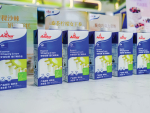
Fonterra is strengthening its foodservice presence in China with the launch of a new cream for professional bakeries at Bakery China 2026 in Shanghai.
OPINION: What does the birth rate in China have to do with stock trading? Just ask a2 Milk Company.
Additional tariffs introduced by the Chinese Government last month on beef imports should favour New Zealand farmers and exporters.
One of the most galling aspects of the tariffs whacked on our farm exports to the US is the fact that, now more than ever, US farmers are being propped up by government welfare – a direct result of Trump’s hardline on its trading partners.


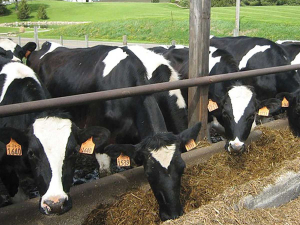
Veterinarians say changes to the code of welfare for dairy cattle provides a positive foundation for improved cattle welfare across the country.
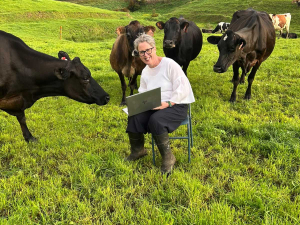
Today, 15 October, is the International Day of Rural Women, which recognises rural women’s contribution to farming, communities and the environment.
Global dairy giant Lactalis has integrated its Australian operations with the Mainland Dairy consumer business it acquired from Fonterra earlier this year.
After almost two decades of sharemilking, saving and building equity, Aaron and Marcia Flay this year realised their long-held dream of settling on their first dairy farm.
Good medium to long term prospects for NZ beef, especially in the US, has heighted the focus on various initiatives to capitalise on this situation.
High country stations, mixed sheep and beef farms, Māori-owned farms, corporates and family operations are among the nine commercial farms taking part in the Livestock Innovation Farming Transformation programme, known as LIFT.

OPINION: It seems Canterbury processor Synlait is still in the doldrums.
OPINION: Get offside with New Zealand First leader Winston Peters at your own peril.