Fonterra FY26 Results: $9.69 Milk Price, $3.4bn Profit
Fonterra has unveiled its annual results for the 2026 financial year, posting $27 billion in revenue and close to $20 billion returned to New Zealand farmer owners and unit holders.




 increase font size
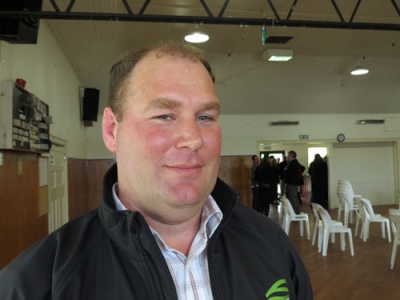 Andrew Hoggard.
Federated Farmers wants the Government to fast-track its infrastructure projects in dairy regions to assist local economies through the downturn in dairy prices.
This comes on the back of Fonterra latest forecast Farmgate Milk Price for 2015-p16, which fallen to $3.85/kgMS.
Federated Farmers dairy spokesperson Andrew Hoggard says small-scale rural service industries, such as engineering or contracting, in some instances might be hit harder than the dairy farmers they traditionally rely on for work.
“When dairy prices go back up, as invariably they will, then the dairy supply and service industries need to be ready and skilled to get back on to the farms to make up for lost time. Or, at least, people will have had other employment in the district and haven’t permanently left for somewhere else.”
“The Government needs to set some priorities over the next year, where it can find valid work for these supply companies.”
Hoggard identifies irrigation projects, rural roads and broadband rollout as obvious examples.
“Then there is the promise made by the Government before the last election. That it would provide $100 million over ten years for planting riparian strips. We could compress that into three to five years.”
“This sort of infrastructure work is going to be done anyway. A little bit of tweaking of Government priorities for where and what type of work to fast-track could make the world of difference to some rural communities with a high exposure to the dairy industry,” he says.
Waikato Federated Farmers president Chris Lewis says some dairy farmers are concerned about an impending El Nino this coming summer, but the consequences are not all that straightforward.
“When the dairy regions in New Zealand get dry then our overseas customers get concerned that worldwide supplies will ease back. They already know New Zealand dairy production will fall this summer for the first time in years. As we’ve seen a number of times in the past, this puts upwards pressure on prices,” Lewis says.
Hoggard says farmers must be in contact with their bankers and advisers.
“Farmers should still be budgeting conservatively in the short term. We should all remember though that there are two critical things here. First, is that the medium to long-term outlook for our dairy exports into Asia is very positive. The second thing is that the banks realise this, and work through their lending to farmers, will be in the best position to capitalise on this future growth.”
Fonterra has unveiled its annual results for the 2026 financial year, posting $27 billion in revenue and close to $20 billion returned to New Zealand farmer owners and unit holders.

Federated Farmers says new legislation replacing the Resource Management Act will cut red tape, unlock investment and help grow New Zealand's export-led economy, after the Planning Bill and Natural Environment Bill passed their third reading in Parliament yesterday.
Leading figures from the major political parties will be questioned on their primary sector policies at the Rural Issues Debate at Mystery Creek Events Centre, Hamilton, on 30 September.
Fonterra Co-operative Group has confirmed the independently assessed candidates standing for election to its board in 2026.
Fonterra has revised its Farmgate Milk Price forecast for the 2026/27 season, lifting the midpoint and narrowing the range on the back of improving global dairy commodity prices.



Federated Farmers says it welcomes Labour's commitment to reviewing the Sharemilking Agreements Act, calling on other major parties to do the same.
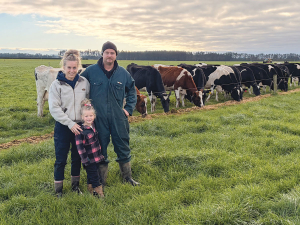
For Canterbury dairy farmers Sian Meijer and Rick Wobben, wearable technology has become one of their most valuable on-farm tools - helping manage 1850 cows across an expansive, high-performing dairy operation while improving efficiency, mating outcomes and day-to-day decision making.
Fonterra has unveiled its annual results for the 2026 financial year, posting $27 billion in revenue and close to $20 billion returned to New Zealand farmer owners and unit holders.
The first major update to the Dairy Cattle Code of Welfare in more than a decade has been released, marking what DairyNZ describes as an important step in ensuring animal welfare standards continue to evolve alongside scientific evidence and on-farm realities.
Ravensdown shareholders have elected Jane Montgomery and Kate Acland to the Ravensdown Board for three-year terms, following a closely contested director election.
Federated Farmers says new legislation replacing the Resource Management Act will cut red tape, unlock investment and help grow New Zealand's export-led economy, after the Planning Bill and Natural Environment Bill passed their third reading in Parliament yesterday.




OPINION: It seems Canterbury processor Synlait is still in the doldrums.
OPINION: Get offside with New Zealand First leader Winston Peters at your own peril.




