
DairyNZ Sets Out Election Priorities for Dairy Farmers
Election years are always a concerning time for farmers, according to DairyNZ chair Tracy Brown.




 increase font size
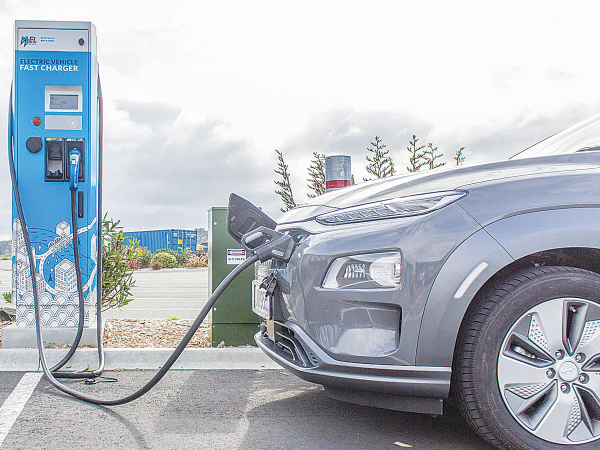 Farmers and tradies needing larger vehicles for their day-to-day work will be hit the hardest.
At a time when New Zealand's rural sector is already carrying a large can to keep the country's finances in the black, it looks like that can will get a little heavier.
The Government's recently released Clean Car Discount Package is designed to encourage the uptake of electric vehicles with cash rebates of up to $8,625 for those purchasing "pure" electric vehicles (EV).
While the ida of everyone driving around in EVs is laudable, from January 2022 the sting in the tail will be a penalty of around $3,000 on the purchase price of utes, which will be used to subsidise the "go green" initiative.
This means that farmers, rural supply companies and an army of tradies who need these larger vehicles for their day-to-day work, will be subsidising urban dwellers to help them buy a low emission runabout or town car.
The penalty may increase even further in January 2023 when the Government's Clean Car Standards come into play - aimed at penalising manufacturers of vehicles with higher CO₂ emissions, meaning a further hike in purchase prices.
David Crawford, chief executive of the Motor Industry Association, says the problem for users of such vehicles is there are currently no alternatives available. He says while there is talk of electric utes being available by 2030, even hybrid utes are not likely before the middle of the decade.
In the same vein, DairyNZ chief executive Tim Mackle is suggesting that because of the fact that vehicles of this type are essential for farmers and rural professionals, rather than a "nice to have" purchase, they should be exempt from the scheme until other greener options are readily available.
Some industry observers are suggesting that the financial implications of the government initiative might result in some users holding on to and running older, dirtier vehicles, while trade-in prices for these vehicles is likely to take a hit.
Election years are always a concerning time for farmers, according to DairyNZ chair Tracy Brown.

OPINION: To a chorus of crying greenies, and not a minute too soon, the Government has moved to put the courts back in their place through proposed amendments to the Climate Change Response Act 2002, intending to limit climate litigation claims such as Smith v Fonterra, in the interests of providing greater certainty for vital industry.
OPINION: The coalition Government’s plan to make about 9000 public servants redundant looms as a major election issue
Prime Minister Christopher Luxon has announced changes to the ministerial lineup, including a new Minister for the Environment and a new Associate Agriculture Minister.
OPINION: Federated Farmers' latest farmer confidence survey results won’t surprise too many people.



Mark Hooper has been appointed the new chair of NZPork, the industry organisation representing New Zealand pig farmers.
As the India-New Zealand free trade agreement enters into force, New Zealand’s apple industry has reaffirmed its commitment to the long-term development of India’s apple sector.
Fonterra shareholders can begin voting on Tuesday 20 October in the 2026 Board of Directors’ election, a Co-operative Council election in one Ward, and seven Annual Meeting resolutions.
National’s pledge to introduce 19 new national standards shows the party is serious about getting Wellington out of farming, Federated Farmers says.
The National Party’s policies to make it easier to grow fresh vegetables, secure reliable water and energy and simplify farm planning are practical changes that will give growers the confidence to invest, according to Horticulture New Zealand (HortNZ).


OPINION: It seems Canterbury processor Synlait is still in the doldrums.
OPINION: Get offside with New Zealand First leader Winston Peters at your own peril.