
DairyBase and MINDA Link Up to Cut Farmer Paperwork
Farmers can spend less time on paperwork, thanks to a new data sharing agreement between DairyNZ’s DairyBase and LIC’s MINDA software.




 increase font size
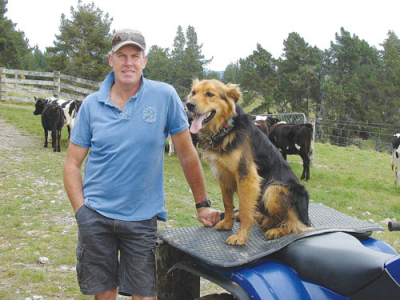 LIC chairman Murray King.
LIC chairman Murray King says New Zealand dairy farmers must remain ambitious about maintaining their global edge in productivity and profitability.
Speaking at LIC’s annual meeting in Invercargill, King said NZ’s dairy industry is vulnerable to the same disruption other industries have experienced in recent years from new technology and innovation.
“There are also clear disruptive threats to the dairy industry and LIC from environmental challenges, to regulation, to alternative milk products.
“We have to be constantly improving and adapting the way we do business,” he says.
“Standing still is not an option. In this age of disruption and radical change if we don’t continue to evolve we put at risk what you value most about your co-op and the industry.”
It was the first time the farmer owned cooperative held its annual meeting in Southland, attended by local farmers, LIC directors, shareholder councillors and staff from the area and Waikato head office.
King outlined plans to protect and grow the co-op, and the roadmap for adapting to disruption. This included the separation of LIC into two businesses which was completed in 2016, the transformation programme now underway and defining the co-op’s core purpose.
“LIC is in a process of change and transformation. This is about protecting the fundamentals of the co-operative while making sufficient profits to enable LIC to reinvest for the future.
“The cost efficiencies and business growth delivered in the transformation programme have been key contributors toward a better result in the 2016-2017 financial year.
“As a result of the transformation we are also expecting a significant improvement in earnings in future years.”
The next step is share simplification. In response to concerns raised by shareholders, LIC began a comprehensive review of its share structure two years ago. This review found that the current two-share structure is not best for meeting the current and future needs of the cooperative and farmers.
“We believe that simplifying LIC’s share structure by moving to a single class of shares is an important step in better positioning LIC for the future and ensuring a resilient and adaptable co-op,” says King.
“The threat of disruption in the future means that we have to be able to respond in an agile way to changes and challenges that may lie ahead.
“Moving towards a simpler share structure will help in this process by addressing the growing disparity between LIC’s two classes of shares and making it easier in future to access capital if needed.”
The LIC board will update farmers next year; no final decision has been made.
Farmers can spend less time on paperwork, thanks to a new data sharing agreement between DairyNZ’s DairyBase and LIC’s MINDA software.
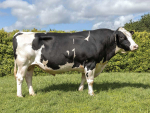
An LIC bull, Tronnoco AR Sadio-ET S3F, bred by Tony and Keri O'Connor of Tronnoco Farming Co Ltd near Timaru, has won the 2026 Mahoe Trophy.
Bovine Viral Diarrhoea (BVD) is estimated to cost New Zealand's dairy and beef industries more than $150 million every year, yet many of the tools needed to control it are already well understood. After more than 25 years in veterinary practice, Andrew Weir, animal health technical specialist at LIC, has seen firsthand the impact BVD can have on herd performance. We asked him about the role of persistently infected (PI) animals and the practical steps farmers can take to reduce their risk.
In the past, a bull could sit comfortably in a breeding team for several years with little change, but today, that’s no longer the case.
Paynes Titus Excelsior ET, an LIC bull bred by Brad Payne and Claire Brodie in the Waikato, has won the JT Thwaites Sire of the Season 2026 Award.


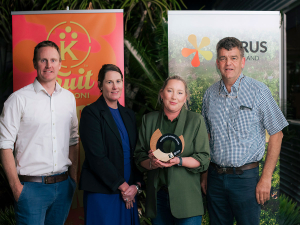
New Zealand's citrus growers were challenged to build their future on the value embedded in their fruit rather than the volume they produce, at Citrus New Zealand's annual gathering in Gisborne on 17 September.
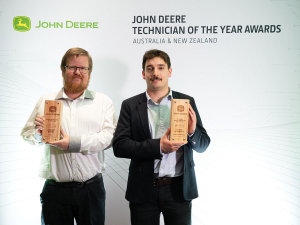
Leading John Deere technicians and apprentices from New Zealand and Australians were recognised at the recent sixth annual JD Technician of the Year Awards, held in Brisbane.
In Dacre, near Invercargill in New Zealand’s South Island, Bruce Dinnington is running a dairy operation unlike any other.
A free online platform aggregating governance vacancies across rural and regional New Zealand has been launched.
Environment Minister Nicola Grigg has announced details of a new rural plastics recycling scheme.
Agricultural drone operators say that a government decision to allow lower-risk drone work without certification won’t lower standards but drive innovation and efficiency.


OPINION: It seems Canterbury processor Synlait is still in the doldrums.
OPINION: Get offside with New Zealand First leader Winston Peters at your own peril.




