What Would Synlait Be Worth to Fonterra or a2 Milk?
Speculation of a possible joint move by Fonterra and a2 Milk to buy Synlait raises a much bigger strategic question, says agribusiness expert Dr Nic Lees.




 increase font size
 Over the last 25 years, New Zealand farmers have reduced the intensity of their on-farm biological emissions by about 20%, says Fonterra.
Fonterra says New Zealand dairy farmers are among the most carbon-efficient dairy producers in the world.
It points out that the emissions intensity of the co-op's NZ dairy production is approximately one third of the global average.
In its submission to the Climate Change Commission, Fonterra states that a litre of milk produced in New Zealand creates 0.91kg of CO2 emissions - compared to the global average of 2.5kg of CO2 emissions.
This efficiency has come through New Zealand's pastoral farming system, significant research and investment, and our farmers' willingness to continually adapt and improve their farming practices, it says.
Over the last 25 years, New Zealand farmers have reduced the intensity of their on-farm biological emissions by about 20%.
"These biological emissions include methane and nitrous oxide that are produced by ruminant animals, like cows, and to a lesser extent from on-farm use of fertilisers," it says.
Being a farmer owned co-operative, Fonterra says its role is to support farmer shareholders, while acknowledging the autonomy of their farming businesses.
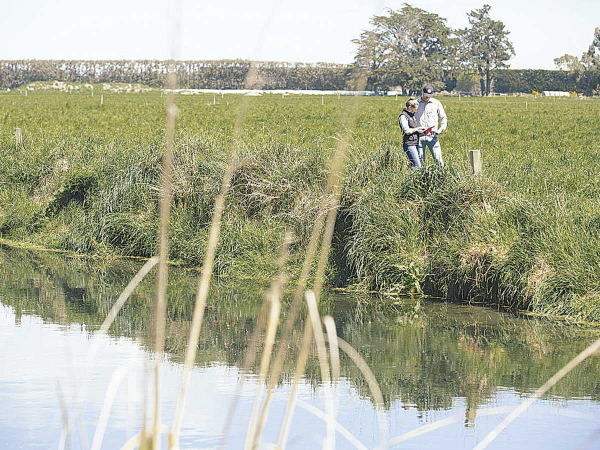
"For many years our farmers have reduced the impact of their businesses on the environment and an example of this activity is that now 98% of waterways on their farms are fenced."
As part of its commitment to reducing the impact of farming on the environment, the co-operative employs 40 full time Sustainable Dairy Advisors who create industry-leading Farm Environment Plans for farmers.
All Fonterra farmers will have a Farm Environment Plan by 2025. Currently 43% of farmers have a plan, which is an increase from 23% in 2019, and 12% in 2018.
Fonterra says the Farm Environment Plans are the primary advisory mechanism for supporting farmers to identify and achieve good farming practices.
"These will play a core role for providing farmers with advice on good farming practise actions that the Commission has anticipated as being required to meet the emissions reductions and subsequent carbon budgets."
In October 2020, every co-operative farmer received a farm specific environmental report which combines a Greenhouse Gas Report and Nitrogen Risk Scorecard.
Understanding the amount of emissions is the first step in building our farmers' awareness of their emissions profile, how they are performing relative to their peers and in identifying efficiency opportunities, it says.
"We have 68 Farm Source retail stores across New Zealand that supply farmers the products they need on farm.
"We partner with other organisations ensuring our farmers have access to smart technology."
Committed Co-Op
Fonterra has reiterated its commitment to the He Waka Eke Noa Joint Action on Climate Change Partnership.
The targeted milestones of the partnership strongly align with the support Fonterra is currently providing its farmers, like Greenhouse Gas Reports and Farm Environment Plans.
Fonterra believes that the He Waka Eke Noa partnership provides the agricultural sector with the right forum to consider how best emissions reductions can be achieved and supported by all farmers and growers across all land uses.
Fonterra says it is an active participant within the emissions reporting, farm planning and extension work-streams.
"It should be noted that as farms are complex biophysical systems, each of these potential actions should be viewed as part of the toolbox for farmers to select and implement within a Farm Environment Plan that is specific for their farming situation."
The co-op supports the mandatory use of Farm Environment Plans across all farm systems as they are a critical tool for change.
"We have long been proactive in establishing systems and developing support capability and capacity for the rollout of Farm Environment Plans with our farmers.
"We are committed to working collaboratively to find a solution to Farm Environment Plan data collection, integration and distribution.
"We have committed to working with the Local Government New Zealand Regional Sector and others to find an integrated solution for our plans which would allow local and central Government to get access to the information they require.
"We are also seeking to work with the Government to ensure that the mandatory use of plans includes appropriate minimum standards; that plans are regularly updated and audited; and that they are delivered by appropriately qualified people."
Speculation of a possible joint move by Fonterra and a2 Milk to buy Synlait raises a much bigger strategic question, says agribusiness expert Dr Nic Lees.

In the past, much has been made of the concept of farm to fork, but an Australian expert in food science and marketing with experience in the dairy industry, Dr Angeline Achariya, says the reverse of this slogan is critical to win modern day consumers.
A four year trial has reaffirmed that mixing plantain into dairy pastures can help reduce nitrogen losses to freshwater while maintaining milk production and profitability, say researchers.
Fonterra has opened its upgraded Chengdu Application Centre, bringing New Zealand dairy expertise closer to customers in one of China's fastest-growing regions.
Tatua chair Stephen Allen says he leaves the co-op with a deep sense of gratitude for the people who have contributed to its success.
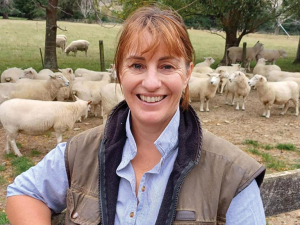
B+LNZ's Wormwise veterinarian Mary Bowron has won the Best Sheep and Beef Vet of the Year Award in recognition of her outstanding contribution to New Zealand’s sheep and beef sector.
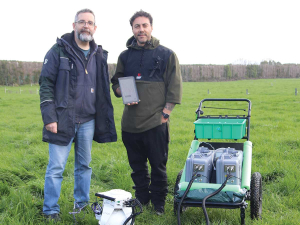
Researchers at Massey University are using a special piece of scientific equipment to improve the measurement of greenhouse gas emissions from pasture soils.
More signs of a booming kiwifruit sector.
OPINION: David Seymour and James Meager's plan to make it easier for farmers and orchardists to operate drones can best be described a 'courageous' move.
New Zealand wool is reaching new heights as air filtration companies move away from synthetic products to biodegradable alternatives.
Opuha Dam's ability to protect South Canterbury communities from major flooding has taken a significant step forward, with Opuha Water Limited (OWL) successfully commissioning a new outlet valve capable of releasing record volumes of water from the dam ahead of a weather event.
OPINION: After hogging the media limelight for telling a NZ Chinese MP to "go back home", Winston Peters has decided…
OPINION: With fuel prices soaring, one would have expected most farmers to be reclaiming excise duty on petrol.