DairyBase and MINDA Link Up to Cut Farmer Paperwork
Farmers can spend less time on paperwork, thanks to a new data sharing agreement between DairyNZ’s DairyBase and LIC’s MINDA software.




 increase font size
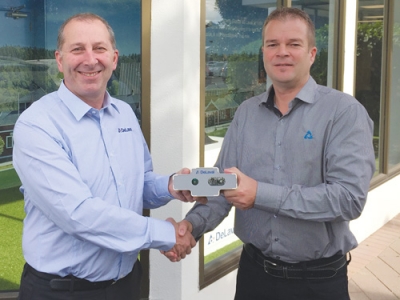 DeLaval Oceania regional president Andrew Pooch (left) and LIC Automation sales and marketing manager Lester Deighton with the 3D camera.
An automated body condition scoring system for New Zealand-bred cows will be launched at National Fieldays next month.
The technology, a world first, combines DeLaval's BCS camera system with LIC Automation's technology and knowledge of NZ herd characteristics.
DeLaval Oceania regional president Andrew Pooch says it is pleased to be cooperating with LIC Automation.
"It eliminates commercial barriers and will offer all NZ dairy farmers opportunity for body conditioning scoring to be fully automated, eliminating the guesswork and labour hours associated with a manual system.
"This could not be more timely with the new animal evaluation process in place in NZ since February 2016 making BCS trait mandatory for bull evaluation."
LIC Automation sells services and solutions such as dairy genetics and information, says Paul Whiston, chief executive.
"Collaboration in innovative technology... increases productivity and prosperity onfarm. Automating the body condition scoring process will deliver greater consistency and [finer] data to farmers to assist in their decisionmaking and herd management."
The DeLaval BCS is based on a 3D camera; when a cow passes under the camera the system recognises the movement and selects the best still image of the cow in the video sequence. The image is converted into an accurate BCS and can be accessed via DeLaval's herd management system DelPro or LIC's herd management system Minda.
The DeLaval BCS condition scoring allows the farmer to plan and optimise feeding according to a cow's BCS score, ensuring they have peak body condition in the lactation cycle.
Keeping cows at ideal condition during lactation ensures maximum milk yield, improves pregnancy rate and minimises calving and post calving problems, the company says.
Farmers can spend less time on paperwork, thanks to a new data sharing agreement between DairyNZ’s DairyBase and LIC’s MINDA software.
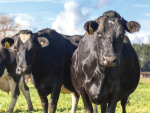
Body Condition Score (BCS) is a critical element in managing the health and reproduction of the dairy herd.
An LIC bull, Tronnoco AR Sadio-ET S3F, bred by Tony and Keri O'Connor of Tronnoco Farming Co Ltd near Timaru, has won the 2026 Mahoe Trophy.
Bovine Viral Diarrhoea (BVD) is estimated to cost New Zealand's dairy and beef industries more than $150 million every year, yet many of the tools needed to control it are already well understood. After more than 25 years in veterinary practice, Andrew Weir, animal health technical specialist at LIC, has seen firsthand the impact BVD can have on herd performance. We asked him about the role of persistently infected (PI) animals and the practical steps farmers can take to reduce their risk.
The transition period is the make-or-break window for your entire season. If this period is poorly managed, you don't just see a few downer cows, you see a downward spiral that affects the cow's health, production and reproduction long into the season.

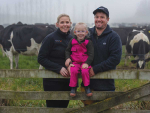
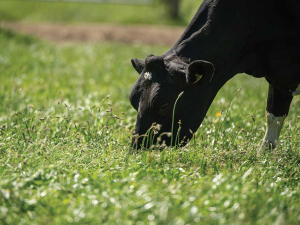
Farms across the upper North Island are trialling different pasture mixes as part of a research programme that aims to build greater resilience into farming systems.
Election years are always a concerning time for farmers, according to DairyNZ chair Tracy Brown.
The Ballance Farm Environment Awards are coming to the West Coast of the South Island.
Most dairy regions around the country have had a pretty good season so far says Tracy Brown.
Rural leader Mark Hooper has been appointed as an independent director to the NZPork board, bringing extensive farming, governance and advocacy experience to the role.

OPINION: It seems Canterbury processor Synlait is still in the doldrums.
OPINION: Get offside with New Zealand First leader Winston Peters at your own peril.