AgFirst Warns Dairy Farmers Not to Expect Repeat Season
A warning to dairy farmers not to expect the same good conditions that they experienced last season, has been issued by a leading farm consultant.




 increase font size
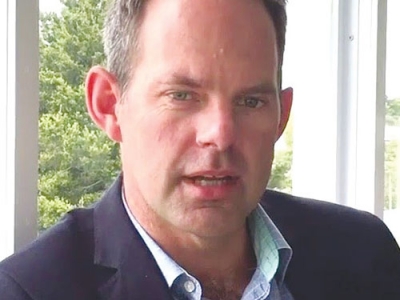 James Allen, AgFirst consultant.
The notion that 50/50 sharemilkers will one day own their farms seems to be disappearing.
Research just revealed by AgFirst consultant and recognised sharemilking expert James Allen shows that today just 50% of sharemilkers see farm ownership as their ultimate goal – down from 70% two decades ago.
He told Dairy News that the goals and aspirations of herd owning 50/50 sharemilkers is changing. He says it could be argued that many 50/50 sharemilkers see the goal of farm ownership as unattainable because of the volatile state of the dairy industry.
"But the flip side is that some people out there are quite happy with their position as sharemilkers building up equity. Take the variable order sharemilker milking 1500 cows: most are making a good cash return. Do they want to slip to owning a 300 cow farm and being back in the shed fulltime, probably in an older shed and on a farm not as well set up as the one they are now on? They are making a career choice to stay where they are."
Having delved into industry statistics, done a nationwide survey and run workshops around the country, Allen has discovered little change in the number of sharemilkers on NZ dairy farms over many years.
He says 32% of farms are run by a sharemilker of some description but the number of 50/50 sharemilkers is in decline.
"As of 2015 there were 2050 50/50 sharemilkers out of a total of 3879 sharemilkers. If we go to 2010 there were 2300 50/50 sharemilkers and in 2005 there were 2700 herd owning sharemilkers," he says.
Allen says the reason for the decline in 50/50 sharemilkers is twofold: on many farms the debt levels are too high, and corporate farming -- on the increase -- offers no opportunities for sharemilkers. This is particularly so in the South Island where just 13% of farms are run by sharemilkers versus 18% in the North Island.
"Despite this there is still a lot of industry support for herd owning sharemilkers, much of it based on the tradition that sharemilking is a pathway to farm ownership. A lot of people want to support that. The industry has a lot of potential for young people looking for careers."
Traditionally there is stronger support for sharemilkers in Taranaki and Waikato, he says.
Allen's research shows a huge variation in sharemilking agreements. He says the volatility of milk prices season by season, and within seasons, needs taking into account when drafting sharemilking agreements to ensure sharemilkers don't get short changed. He says the present agreements are not broke, they just need to be modified to meet the changing times.
Allen says the modern-day sharemilker has to be more business savvy with good financial, human resource and up-to-date farm management skills. HR skills are particularly important for today's sharemilkers.
A warning to dairy farmers not to expect the same good conditions that they experienced last season, has been issued by a leading farm consultant.

As fuel and fertiliser prices rise and with uncertainty in the future, farmers are being urged to go over their budgets with a fine-tooth comb.
For the most part, dairy farmers in the Waikato, Bay of Plenty, Tairawhiti and the Manawatu appear to have not been too badly affected by recent storms across the upper North Island.
Fears of a serious early drought in Hawke’s Bay have been allayed – for the moment at least.
Farmers appear to be cautiously welcoming the Government’s plan to reform local government, according to Ag First chief executive, James Allen.

Esther Guy-Meakin has been announced as the new chief executive of the New Zealand Meat Board (NZMB).
According to a progress report on the Aotearoa Horticulture Action Plan (AHAP), New Zealand's horticulture sector is making real progress on the big issues facing growers.
A team effort that is paying dividends for the wider New Zealand economy.
A strong sense of community involvement is what propelled the Federated Farmers' North Canterbury president Bex Green to the honoured title of the Feds' Advocate of the Year 2026.
The country's second largest milk processor is warning against 'complacency' during a review of competition regulations in the dairy sector.
Oamaru-based livestock handling specialist Te Pari has bought Combi Clamp, the New Zealand manufacturer of Combi Clamp manual sheep handlers.
New research suggests the ag sector can unlock a $2.9 billion increase in profitability, not by farmers and growing more,…
OPINION: The culture of helping someone in need is alive and well in the ag sector.