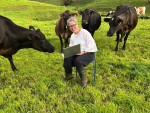
International Day of Rural Women: Two DairyNZ Farmers’ Stories
Today, 15 October, is the International Day of Rural Women, which recognises rural women’s contribution to farming, communities and the environment.




 increase font size
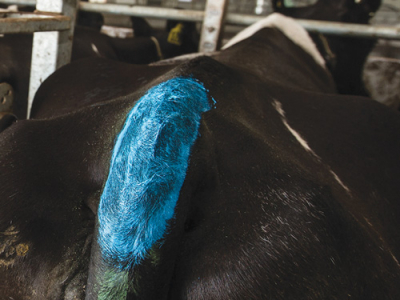 Tail painting can be used to pick out cycling cows.
Getting cows in-calf quickly is the key to achieving a good calving pattern, says DairyNZ.
Heat detection, pre-mating heats and bull management are key ingredients for a successful mating. Getting these right will benefit the farm's submission rate and six-week in-calf rate.
The easiest way to spot cycling cows is to do pre-mating heat detection.
Use tail paint to pick out cycling cows. Use one colour tail paint to start, then a second colour as cows cycle and lose their tail paint. Within two weeks about half the cycling cows will have been identified. At three weeks, cows with the original colour are the non-cyclers.
Calculate the herd's pre-mating cycling rate using the InCalf book for the percentage of cows showing signs of heat before mating begins. If cycling is less than 75% by 10 days before the planned start of mating, heat detection has not been fully effective and/or there are too many non-cyclers.
At that stage it is time to seek advice and consider which options are available to improve heat detection during AB (artificial breeding) and treat non-cycling cows.
The best heat detection starts with careful planning, good observation and the effective use of detection aids. Being able to interpret cow behaviour and other signs is critical, along with good record keeping and training for those doing heat detection.
Start by reviewing the farm's heat detection skills: does everyone know what to look for when detecting cows on heat? Then, decide which combination of aids the farm will use (tail paint, heat mount detectors, activity meters and heat synchronisation).
Tail paint is a cheap and effective way to detect cows on heat. Apply tail paint to all cows just before the start of mating. Touch it up at least weekly and check for cows with rubbed or broken tail paint during milking.
Re-checking tail paint for rub marks immediately before each cow's insemination will avoid inseminating cows not on heat.
To help identify cows not yet inseminated or those only showing weak signs of heat, reapply a different coloured tail paint to recently inseminated cows once other cows no longer try to mount them.
Heat mount detectors can be particularly effective on farms with fewer skilled staff checking cows on heat, and when used with paddock checks for heat.
There are two types of heat mount detectors: pressure-activated tubes or scratch-off patches. Applied to the cow's backbone, the detectors will become brightly coloured and easily recognised.
Again, heat mount detectors should be applied just before mating starts, then monitored for activation and removed at insemination.
Until the end of the AB period, the detector should be replaced after insemination, when the cow is no longer being mounted. Regularly replace any heat mount detectors if they are damaged or coming loose.
Today, 15 October, is the International Day of Rural Women, which recognises rural women’s contribution to farming, communities and the environment.
The first major update to the Dairy Cattle Code of Welfare in more than a decade has been released, marking what DairyNZ describes as an important step in ensuring animal welfare standards continue to evolve alongside scientific evidence and on-farm realities.
Have a plan in place for your cows and staff.
DairyNZ deputy chair Cameron Henderson has been re-appointed unopposed for another term.
OPINION: The stats speak for themselves.


Federated Farmers has welcomed new rural policies released by ACT, saying they align closely with its own election priorities.

Rural Contractors NZ says proposed changes to land transport rules for agricultural vehicles are a welcome response by the Government to out of date regulations which have seen members hit with huge fines.
Alliance is calling for final applications for its 2027 Graduate Programme, with applications closing on Sunday 25 October.
Decades piloting planes has ensured vet and farmer David Hayes is focused on safety. So, after a serious accident while welding on farm, he is sharing his experience so others can learn from it.
Canterbury milk processor, Synlait Milk has confirmed Leon Fung as its chief executive officer.
OPINION: Making it easier to collect rainwater and use it to grow crops and livestock is a no brainer.


OPINION: It seems Canterbury processor Synlait is still in the doldrums.
OPINION: Get offside with New Zealand First leader Winston Peters at your own peril.




