Using the right plants and techniques will make the most of riparian planting and give you value for money by getting it right first time.
Planting fenced riparian areas further benefits the environment as plants function like a sieve, helping to filter out sediment and nutrients before they enter waterways.
Riparian plants help prevent land erosion and increase the habitat for native wildlife.
Once you have decided on a fence setback, the next step is deciding what to plant, where and at what spacing.
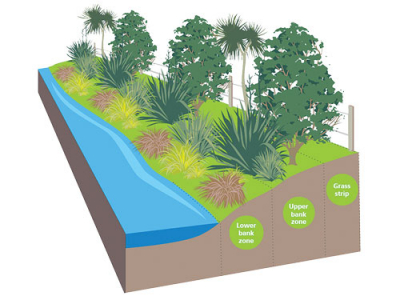
In the riparian margin between the waterway and fence, there can be up to three zones of plant types.
Planting the upper and lower banks will improve water quality more than using a grass strip alone.
Download your region’s riparian guide to view the table of riparian plants best suited to your region.
A grass strip at least 1m wide should be left between all fences and waterways to help filter sediment, phosphorus and faecal bacteria from runoff before it reaches the water. The grass strip will also prevent plants from tripping electric wires or being grazed if the lower banks will be planted.
The upper bank zone is on higher ground but may still be partially flooded every couple of years. Use flaxes, grasses, shrubs or trees which provide shade and shelter.
The lower bank zone is prone to flooding so plants need to be tolerant of waterlogging. Use plants such as sedges and rushes, which are well rooted and can survive many days under water.
Tackle weeds
Keeping on top of weeds is crucial in the first five years to establish a healthy riparian area.
The most effective maintenance option is to combine the following protective and active maintenance methods:
Surround each plant with at least a 30-40cm diameter biodegradable weed mat, mulch or old wool carpet to suppress weed growth.
Avoid using plain wood chips around the plant as these will strip all the nitrogen out of the soil, causing the plant to yellow off and die.
Stake each plant for easy location and brush-cut, hand weed or carefully spray with a glyphosate-based herbicide twice a year.
If spraying, follow product guidelines; desired plants are usually sensitive to herbicides.
• Article: DairyNZ