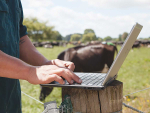
DairyBase and MINDA Link Up to Cut Farmer Paperwork
Farmers can spend less time on paperwork, thanks to a new data sharing agreement between DairyNZ’s DairyBase and LIC’s MINDA software.




 increase font size
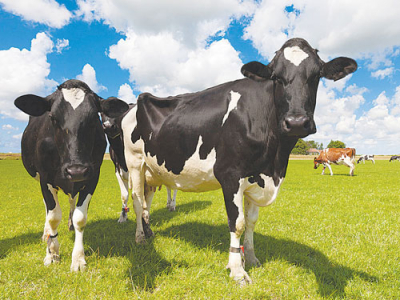 LIC is working to make production worth (PW) more relevant.
A lot has changed in farming over the last 22 years since LIC launched the production worth (PW) index in 1996, with breeding worth (BW) and lactation worth (LW).
BW has undergone a number of reviews and updates; in contrast PW has remained the same since it was introduced.
As an equally important part of an efficient, sustainable farming business, LIC is working to make PW more relevant for today’s farmers, and the herd improvement decisions they make in their business each day.
In 2017, LIC completed a review of PW. They talked to farmers, breeders, industry stakeholders and their own staff about what PW means to them, and how it could be improved.
The review found that although PW remains a useful index for farm profitability, it needs to be updated to make it more relevant onfarm for herd improvement decisions like buying, selling and culling.
As a result of the review and the feedback received from farmers, the first update was implemented to PW on February 17 with the AE run. This update added somatic cell into the PW calculation.
Somatic cell count is important in decisions to cull cows and it can have a big impact on cow health, production and reproduction.
It also plays an important part in animal performance and efficiency, as cows which have ongoing issues with high somatic cells will probably still eat the same, but produce less and cost more in health treatments.
PW is a significant tool to lead culling decisions, to identify and retain the most valuable cows in a herd, but we know that many farms also review somatic cell data to help inform those decisions.
LIC wants to make that secondary consideration seamless by adding somatic cell into PW. The trait was added to BW in 2005.
As per the estimation of other production traits, somatic cell data will be sourced from herd testing, but from the first three lactations only.
PW as a whole, primarily focuses on information from the first three lactations so farmers can highlight the lifetime production potential of their younger cows, enabling them to make decisions on whether they should be retained in their herd or not.
Cows that are not herd tested will have an estimated somatic cell score PV based on ancestry information only (and heterosis effects if the animal is a crossbred). The associated reliability will be very low indicating the lack of available information.
New Zealand Animal Evaluation Ltd (NZAEL), a wholly owned subsidiary of DairyNZ, has agreed to provide the economic values for all PW traits including somatic cell, based on the national and industry good economic models it developed and operates.
What it means for your cows
Farmers could see changes in the PW of their cows after the update, to reflect somatic cell scores from their first three lactations.
Across all breeds, half of all cows are expected to move less than 10PW. At an individual animal level, some extreme movements will be observed if high levels of somatic cell counts were recorded in the earlier years of an animal’s productive life.
Reliability associated with the updated PW, and individual production values, is dependent on how much herd test data is available to use in the estimations.
The more data there is available, the higher the reliability will be.
• Article provided by LIC
Farmers can spend less time on paperwork, thanks to a new data sharing agreement between DairyNZ’s DairyBase and LIC’s MINDA software.
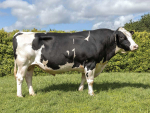
An LIC bull, Tronnoco AR Sadio-ET S3F, bred by Tony and Keri O'Connor of Tronnoco Farming Co Ltd near Timaru, has won the 2026 Mahoe Trophy.
Bovine Viral Diarrhoea (BVD) is estimated to cost New Zealand's dairy and beef industries more than $150 million every year, yet many of the tools needed to control it are already well understood. After more than 25 years in veterinary practice, Andrew Weir, animal health technical specialist at LIC, has seen firsthand the impact BVD can have on herd performance. We asked him about the role of persistently infected (PI) animals and the practical steps farmers can take to reduce their risk.
In the past, a bull could sit comfortably in a breeding team for several years with little change, but today, that’s no longer the case.
Paynes Titus Excelsior ET, an LIC bull bred by Brad Payne and Claire Brodie in the Waikato, has won the JT Thwaites Sire of the Season 2026 Award.


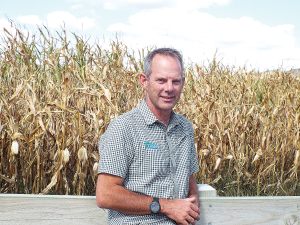
Surprised, humbled and quite thrilled. That’s the reaction of James Allen, one of the founding partners and now chief executive of AgFirst, on being made a life member of the Institute of Rural Professionals.
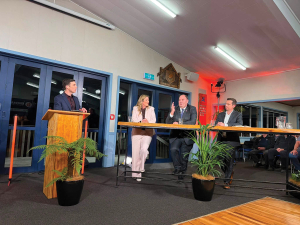
It was billed as a chance for all the political parties to woo the rural vote, but question marks hang over just how effective this was.
Minister of Conservation Hon Tama Potaka has appointed Susan O'Regan as Chair of the Queen Elizabeth II National Trust (QEII) for a three-year term.
Red meat farmers are welcoming Labour’s plan to review the Emissions Trading Scheme and not to campaign on pricing agricultural emissions.
Where any worker in the kiwifruit industry is mistreated, we expect the authorities to take action.
Mid Canterbury Federated Farmers arable chair, Bevan Lill, said Beef + Lamb NZ data indicated that for the last six years, the average arable return on investment was about 0.8% while inflation ran about 4% - so the average arable farm was going backwards at about 3% a year.


OPINION: It seems Canterbury processor Synlait is still in the doldrums.
OPINION: Get offside with New Zealand First leader Winston Peters at your own peril.




