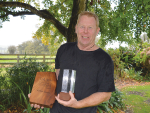
Fifth-Generation Farmer Transforms Dairy Farm into Biodiversity Hotspot
Fifth generation farmer Stu Muir believes dairy farming and conservation can go hand in glove.




 increase font size
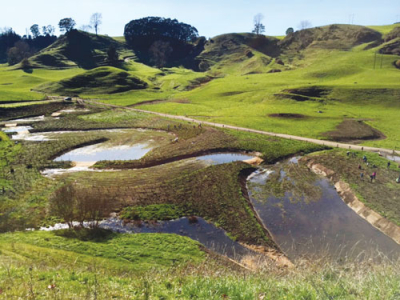 Wetlands help protect the health of waterways.
Intensive farming practices can discharge lots of contaminants – notably nitrogen, phosphorus, sediment and pathogens – into our waterways.
Wetlands are like giant kidneys protecting the health of waterways: they help dilute and filter material that could otherwise harm our lakes, rivers and other waterways. Natural wetlands have been appropriately called the ‘kidneys of the landscape’ because of their ability to store, assimilate and transform contaminants lost from the land before they reach waterways.
With World Wetlands day occurring on February 2, it is a good time to reflect on these and other benefits that wetlands provide.
Wetland is a generic term for the wet margins of lakes, ponds, rivers, streams, estuaries, lagoons, bogs and swamps.
Wetlands once covered large areas of the country. Now they are some of our rarest and most at-risk ecosystems. They contain a diverse range of plants and animals and are home to many rare and threatened species that are remnants of the original biodiversity of the area.
It is estimated that about 90% of New Zealand’s wetlands have been drained. This is one of the largest wetland losses anywhere in the world. Wetlands now occupy only about 2% of the country’s total land area.
So the combination of more agriculture and less wetland contributes to the risks to our rivers and streams, but this also indicates strategies for reducing the effects of agriculture – by incorporating wetlands into farms. Sometimes it may be as simple as fencing out existing wet areas, or it might involve creating one with a low bank.
Many farms have low lying and wet areas that can be managed as small wetlands with minimal impact on farm production, but potentially major benefits for water quality and biodiversity.
Nitrogen and phosphorous enter waterways through ground water and surface runoff. Wetland vegetation uses these nutrients for growth. Research indicated that wetlands remove up to 90% of nitrates from ground water through a process called denitrification. Wetland plants trap sediment suspended in water, improving water quality. In riparian areas, their roots hold stream banks together, reducing erosion.
Nutrient loss from farms is greatest when the volume and speed of runoff water is greatest, either through surface runoff or through the soil profile. Therefore, slowing down and controlling water movements across farm land is a critical factor in reducing nutrient loss into waterways. A series of small, shallow sediment traps or sediment retention dams can be constructed throughout a catchment to take some of the energy out of the water and if these are managed to remain wet for most of the year they will replace those kidney-like functions and enhance a farm’s environment. They will also regulate the flow of water by soaking up excess floodwater and then slowly releasing it to maintain summer flows or recharge ground water.
Bigger is generally better, but within a farm small areas are good because you can create more of them, they are generally easiest to fit into a farm’s budget and topography, they treat the contaminants close to where they come from, and they can generate a more widespread biodiversity benefit on a farm.
Waikato Regional Council can offer free advice to landowners on managing wetlands, including information on fencing, planting and weed control.
• Bala Tikkisetty is a sustainable agriculture coordinator at Waikato Regional Council. Contact 0800 800 401 or This email address is being protected from spambots. You need JavaScript enabled to view it.
Fifth generation farmer Stu Muir believes dairy farming and conservation can go hand in glove.

OPINION: Soil is one of the most valuable assets that a farmer has. It is our collective responsibility to make use of soils without damaging either the soil or any other part of our environment, protecting them for our own use and use by future generations.
OPINION: Good nutrient management will keep nutrients cycling within the farm system and reduce losses to the environment to the bare minimum.
OPINION: One teaspoon of soil contains more living organisms than there are people in the world and New Zealand loses about 192 million tonnes of soil to the ocean every year.
This should be the decade to focus on sediment loss to reduce its impact on the wider environment.



Alliance is calling for final applications for its 2027 Graduate Programme, with applications closing on Sunday 25 October.
Decades piloting planes has ensured vet and farmer David Hayes is focused on safety. So, after a serious accident while welding on farm, he is sharing his experience so others can learn from it.
Canterbury milk processor, Synlait Milk has confirmed Leon Fung as its chief executive officer.
OPINION: Making it easier to collect rainwater and use it to grow crops and livestock is a no brainer.
As part of its Election 2026 coverage, Rural News asked political parties how they would help pull the arable sector out of the doldrums. Here's what they said:
Farmers are being encouraged to rethink how they manage waste on farm with the launch of ruralwastesorted.co.nz, a new website bringing together practical tips, real farmer experiences and resources.



OPINION: It seems Canterbury processor Synlait is still in the doldrums.
OPINION: Get offside with New Zealand First leader Winston Peters at your own peril.




