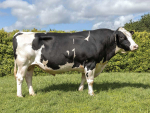
Timaru-Bred Bull Takes Out 2026 Mahoe Trophy
An LIC bull, Tronnoco AR Sadio-ET S3F, bred by Tony and Keri O'Connor of Tronnoco Farming Co Ltd near Timaru, has won the 2026 Mahoe Trophy.




 increase font size
 Agritech is one of our fastest growing export sectors, and a key area of focus for investors globally, says LIC chief executive Wayne McNee.
Agritech has a vital role to play in the COVID-19 recovery, according to LIC chief executive Wayne McNee.
OPINION: In the wake of COVID-19, New Zealand should be focusing on industries that can help drive our economic recovery and growth over time.
While some of our key sectors have been hit hard, the dairy industry – and wider food sector – is well-positioned to continue to deliver for Kiwis through Covid-19 and help our economy get back on its feet.
But like all sectors, particularly at the moment, the dairy industry needs to keep evolving to meet new challenges head-on and maximise new opportunities.
With Kiwis relying on the primary sector to help lead them out of this crisis, agritech has a vital role to play.
Agritech is one of our fastest growing export sectors, and a key area of focus for investors globally. The reason the sector is attracting so much interest from investors is because food demand, including demand for dairy, continues to grow.
With food security a top concern and dairy considered a stable commodity through Covid-19, the agritech sector has shifted further into the spotlight and more companies are likely to raise capital in the near future.
Agritech encompasses a broad variety of on-farm technologies and innovations, from cow genetics based on genomic evaluation to the software that helps farmers run their day-to-day operations.
New technologies and innovations stand to revolutionise the dairy industry by enabling farmers to increase cow productivity, while achieving better environmental outcomes.
It is critical that New Zealand continues to invest in our agritech sector to cement our position as a world leader and to keep our farmers leading the global pastoral dairy system. To do this, we need innovative products and services to propel us forward. New Zealand’s strong reputation in pastoral systems and in producing high-quality products means we have a sound foundation to build upon.
The amount of investment pouring into the agritech sector globally continues to grow – as does the $1.5 billion value of agritech to New Zealand’s export economy, highlighting the sector’s importance with further opportunities for growth.
Given we are competing globally in one of the most well-capitalised sectors it’s encouraging to see the Government looking to support the transformation of our agritech sector, announcing $11.4 million direct investment in implementing the Agritech Industry Transformation Plan. But more private investment in R&D is also required.
Last year $97.3m was spent on R&D by the top 20 New Zealand agritech companies, according to the TIN Agritech Insights 2020 Report.
LIC spends the highest percentage of revenue on R&D of any established primary sector company. Our R&D spend makes up about 20% of all agritech R&D spend in New Zealand.
Increased investment in R&D will help to secure our leadership in the fast-growing agritech market.
It’s also important that the innovation pipeline that brings our farmers new ideas and technology solutions is supported and that we have the money to take great ideas from incubation through to full commercialisation.
Over the last five years, we’ve seen significant capital flow into agritech start-ups worldwide. New Zealand’s emerging agritech businesses will struggle to scale in the global market without access to the capital they need, so early stage investment will be important in addressing that capital gap.
LIC invested $16m on R&D last year, but we know we also need to look externally. That’s why we recently launched a new agritech start-up investment fund, LIC’s AgCelerator™ Fund. This aims to identify and support individuals and entities seeking to develop innovations that will drive improvements in the health and wellbeing of the national herd, aid in more sustainable milk production and ultimately disrupt the dairy industry in a positive way.
It’s important New Zealand retains its leading dairy reputation at this critical time and investing in new innovations and technology is central to that.
Harnessing investment interest in New Zealand agritech companies will not only support our economic recovery, create jobs, help businesses to scale faster and be a great export earner. It will also help our dairy industry evolve to meet new challenges and keep our farmers (and country) ahead of the game.
• Wayne McNee is chief executive, LIC
An LIC bull, Tronnoco AR Sadio-ET S3F, bred by Tony and Keri O'Connor of Tronnoco Farming Co Ltd near Timaru, has won the 2026 Mahoe Trophy.
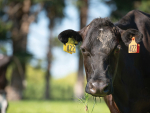
Bovine Viral Diarrhoea (BVD) is estimated to cost New Zealand's dairy and beef industries more than $150 million every year, yet many of the tools needed to control it are already well understood. After more than 25 years in veterinary practice, Andrew Weir, animal health technical specialist at LIC, has seen firsthand the impact BVD can have on herd performance. We asked him about the role of persistently infected (PI) animals and the practical steps farmers can take to reduce their risk.
In the past, a bull could sit comfortably in a breeding team for several years with little change, but today, that’s no longer the case.
Paynes Titus Excelsior ET, an LIC bull bred by Brad Payne and Claire Brodie in the Waikato, has won the JT Thwaites Sire of the Season 2026 Award.
New season data from LIC shows a strong reproductive performance for the 2025-26 season, with a lift in key metrics compared to last season.



Testing confirms H5 bird flu in a single northern giant petrel, found dead on a remote Cape Palliser beach in the Wairarapa, says Dr Mary van Andel, the Ministry for Primary Industries' (MPI) Chief Veterinary Officer.

"What's for dinner?" may sound like a simple question, but for many Kiwi parents, answering it has become a job in itself.
Fifty Eight years ago, on the 16th of August 1968, August Claas, the founder of the harvesting company and father of Helmut Claas, personally presented a Claas Senator combine harvester to Scottish farmer John Steven.
New Zealand consumers are paying more for beef mince than ever before, with the average retail price now sitting above $24 per kilogram, according to Rabobank.
State farmer Pamu has delivered its strongest operating result on record.
Four years since it was first detected in New Zealand, researchers and growers now know much more about management of maize pest fall armyworm (FAW).


OPINION: After hogging the media limelight for telling a NZ Chinese MP to "go back home", Winston Peters has decided…
OPINION: With fuel prices soaring, one would have expected most farmers to be reclaiming excise duty on petrol.