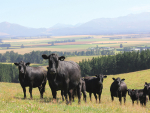
BVD Control Begins Long Before You See A Problem
Bovine Viral Diarrhoea (BVD) is sometimes viewed as a dairy industry issue, but the reality is that the disease can have serious consequences for beef breeding herds as well.




 increase font size
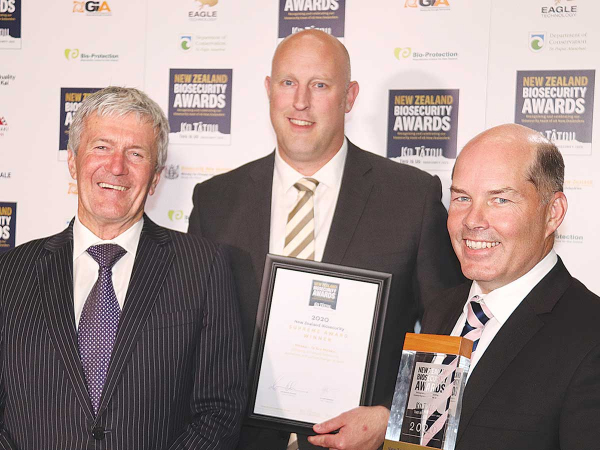 Agriculture Minister Damien O'Connor with winners of the 2020 Biosecurity Supreme Award Miraka Dairy's Grant Jackson (centre) and Richard Wyeth.
Biosecurity is even more important to New Zealand as the country starts to recover from Covid-19.
That’s the message from Penny Nelson, head of biosecurity at the Ministry for Primary Industries. She told Rural News, at the recent biosecurity awards at Parliament, that biosecurity underpins our primary sector exports – as well as many of the special taonga we have. She says we just can’t afford to have big incursions at the moment.
“I was interested to hear that in the KPMG’s agribusiness survey, biosecurity has been the top issue for the past 11 years. I think New Zealanders realise we have a special way of life and we want to keep it.”
Nelson says the awards, which have been held for the last four years, are designed to celebrate the great things that a range of people in communities and industry are doing for biosecurity. She says every year there has been an increase in the number of entries and as word gets out about the awards, more and more people are becoming involved.
Close to 200 people attended the awards ceremony held in Parliament’s banquet hall and hosted by the Minister of Agriculture Damien O’Connor.
Taupo-based dairy company Miraka took the top honours – winning both the industry award and the supreme award for its Te Ara Miraka programme, which boosted biosecurity awareness and culture change within its farmer supplier base.
The programme incentivises farmers, by way of an increase in their annual milk payout, to improve a whole range of practices on their farms. These include environmental, milk quality, food safety, animal welfare, health and safety and biosecurity.
The awards recognised the fact that Miraka had identified that biosecurity was missing from the programme and set about working with external parties to develop a special training course. Each farmer was trained in biosecurity risk assessment, risk mitigations and how to create and implement a biosecurity plan within their business.
The supreme award was presented to the Miraka team by O’Connor who praised the company and its staff for its initiative and strong commitment to biosecurity.
Bovine Viral Diarrhoea (BVD) is sometimes viewed as a dairy industry issue, but the reality is that the disease can have serious consequences for beef breeding herds as well.

Election years are always a concerning time for farmers, according to DairyNZ chair Tracy Brown.
Testing confirms H5 bird flu in a single northern giant petrel, found dead on a remote Cape Palliser beach in the Wairarapa, says Dr Mary van Andel, the Ministry for Primary Industries' (MPI) Chief Veterinary Officer.
Bovine Viral Diarrhoea (BVD) is sometimes viewed as a dairy industry issue, but the reality is that the disease can have serious consequences for beef breeding herds as well.
Four years since it was first detected in New Zealand, researchers and growers now know much more about management of maize pest fall armyworm (FAW).


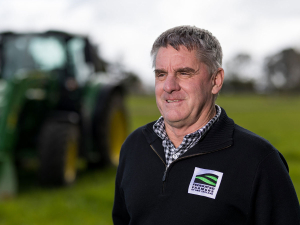
National’s pledge to introduce 19 new national standards shows the party is serious about getting Wellington out of farming, Federated Farmers says.
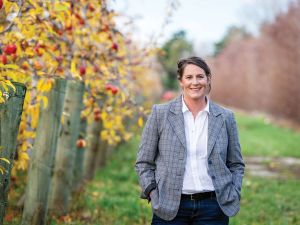
The National Party’s policies to make it easier to grow fresh vegetables, secure reliable water and energy and simplify farm planning are practical changes that will give growers the confidence to invest, according to Horticulture New Zealand (HortNZ).
Fonterra Co-operative Group chief financial officer Andrew Murray has resigned to take up a role outside the dairy giant.
A major move is about to get underway to improve the quality and viability of dairy beef and cattle in NZ.
Veterinarians say changes to the code of welfare for dairy cattle provides a positive foundation for improved cattle welfare across the country.
Today, 15 October, is the International Day of Rural Women, which recognises rural women’s contribution to farming, communities and the environment.



OPINION: The same mainstream media muppets that brought you Jacindamania in 2017 have been flat out pimping for the Opportunities…
OPINION: Your old mate reckons the atrocious way farmers in the UK are treated by their lords and masters in…




