Why Now Is the Time to Plan Farm Succession, Findex Says
OPINION: Succession and long-term planning are perennial topics because it is perpetually sidelined on busy farms.




 increase font size

RABOBANK is predicting global dairy price will recover in six months.
In its Dairy Quarterly Q2: Beyond the tipping point, the bank says prices fell as a result of improved milk production in export regions and the easing of forward purchasing by China.
These mechanisms freed more product for other buyers and lowered the need to ration demand with international dairy commodity prices falling 10% to 20% in the three months to mid-June.
"The pull back in Chinese purchasing has been particularly significant, with evidence that the Chinese industry has accumulated excess inventories after a period of vigorous buying, improved local milk production and weaker local sales. Current prices in the international market have dropped below what we see as sustainable in the medium term," explains Rabobank analyst Tim Hunt.
Milk production growth will slow considerably in the second half of 2014 as lower prices are passed to producers, weather normalises and comparables become tougher to exceed. Consumption in export regions will also slowly improve on the back of higher incomes, employment growth and falling retail prices.
"Together these forces should gradually tighten up the market as we progress through 2014," says Hunt.
"However, we expect little improvement in prices until late in 2014 or early 2015, as China works through its accumulated stocks and the world continues to consume the stronger than expected wave of milk produced in the first half of year."
The report notes that one upside risk to keep an eye on is a developing El Nino event. This has the potential to generate unusually dry conditions in South East Australia and excessive rainfall in Argentina – and hence reduced milk production in both of these export regions.
OPINION: Succession and long-term planning are perennial topics because it is perpetually sidelined on busy farms.
Farms across the upper North Island are trialling different pasture mixes as part of a research programme that aims to build greater resilience into farming systems.
Election years are always a concerning time for farmers, according to DairyNZ chair Tracy Brown.
Most dairy regions around the country have had a pretty good season so far says Tracy Brown.


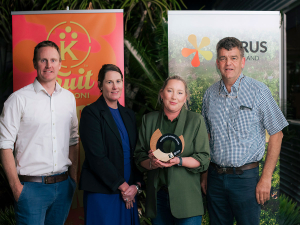
New Zealand's citrus growers were challenged to build their future on the value embedded in their fruit rather than the volume they produce, at Citrus New Zealand's annual gathering in Gisborne on 17 September.

Leading John Deere technicians and apprentices from New Zealand and Australians were recognised at the recent sixth annual JD Technician of the Year Awards, held in Brisbane.
In Dacre, near Invercargill in New Zealand’s South Island, Bruce Dinnington is running a dairy operation unlike any other.
A free online platform aggregating governance vacancies across rural and regional New Zealand has been launched.
Environment Minister Nicola Grigg has announced details of a new rural plastics recycling scheme.
Agricultural drone operators say that a government decision to allow lower-risk drone work without certification won’t lower standards but drive innovation and efficiency.




OPINION: The same mainstream media muppets that brought you Jacindamania in 2017 have been flat out pimping for the Opportunities…
OPINION: Your old mate reckons the atrocious way farmers in the UK are treated by their lords and masters in…