Federated Farmers Backs Year 11 Agricultural Science
Federated Farmers is backing Feilding High School’s call to keep Agriculture and Horticultural Science as a standalone subject in Year 11.




 increase font size
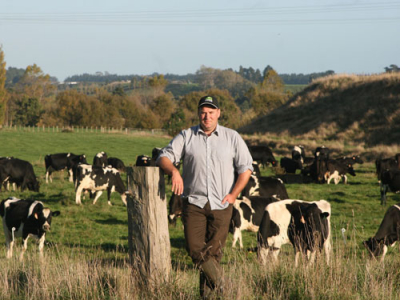 Andrew Hoggard.
Federated Farmers says it generally supports the government’s decision to further restrict the sale of New Zealand farmland to overseas buyers.
Vice-president Andrew Hoggard says the new government policy broadly aligns with that of the Feds.
From December 15 not only will the owners of very large farms proposed for sale to overseas buyers require permission from the Overseas Investment Office (OIO), but any land larger than 5ha will now come under this office’s jurisdiction.
The new directive will not apply to forestry land.
Associate Finance Minister David Parker says the existing directive is too loose. Parker says too often investors buy a NZ farm then use existing systems, technology and management practices which don’t substantially add anything new or create additional value in our economy.
“We want to make it clear that it is a privilege to own or control NZ’s sensitive assets, and this privilege must be earned,” he says.
Hoggard says while the notion of ‘benefits to New Zealand’ in the old policy seemed to be right, in practice it didn’t turn out that way in the decisions of the OIO.
“You’d look at a decision and say ‘really? they view that as a benefit? Somehow a NZ purchaser wouldn’t have done that anyway.”
Hoggard says the new directive will give the OIO a clear message to step up a notch or two in how it assesses the net benefit to NZ.
He says Feds’ concerns, and those of the public, centre on the big trusts which just come to NZ and buy farms but do not contribute to local communities or NZ agriculture in any way.
A big concern is when these people start buying processing facilities, he says. “People are nervous about that.”
But Hoggard hopes the new rules will not prevent people who genuinely come here to farm and to invest in local communities. He gives as examples two prominent members of Federated Farmers -- Anders Crofoot and Willy Leferink -- who he says contributed much; and James Cameron and Julian Robinson – both wealthy individuals – invested in their local communities and brought new benefits to NZ.
“These people have been great for NZ and I would hate to see some blanket guideline that would cut people like that out of the equation.”
Hoggard says farmers and others will watch with interest to see if the new directive is applied fairly.
Federated Farmers is backing Feilding High School’s call to keep Agriculture and Horticultural Science as a standalone subject in Year 11.
As part of its Election 2026 coverage, Rural News asked political parties how they would help pull the arable sector out of the doldrums. Here's what they said:
National’s pledge to introduce 19 new national standards shows the party is serious about getting Wellington out of farming, Federated Farmers says.
OPINION: Rivers never sit still. They start as snowmelt and rain in the high country, pick up a creek here and a stream there, and carry all of it down to where it's needed.
Mobile phone coverage and reliability are deteriorating in rural areas, and farming families are bearing the cost, according to a Federated Farmers survey.


Alliance is calling for final applications for its 2027 Graduate Programme, with applications closing on Sunday 25 October.
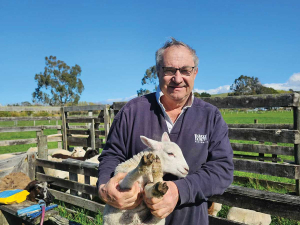
Decades piloting planes has ensured vet and farmer David Hayes is focused on safety. So, after a serious accident while welding on farm, he is sharing his experience so others can learn from it.
Canterbury milk processor, Synlait Milk has confirmed Leon Fung as its chief executive officer.
OPINION: Making it easier to collect rainwater and use it to grow crops and livestock is a no brainer.
As part of its Election 2026 coverage, Rural News asked political parties how they would help pull the arable sector out of the doldrums. Here's what they said:
Farmers are being encouraged to rethink how they manage waste on farm with the launch of ruralwastesorted.co.nz, a new website bringing together practical tips, real farmer experiences and resources.


OPINION: The same mainstream media muppets that brought you Jacindamania in 2017 have been flat out pimping for the Opportunities…
OPINION: Your old mate reckons the atrocious way farmers in the UK are treated by their lords and masters in…




