New Zealand's only large-scale beef feedlot has confirmed a Mycoplasma bovis infection.
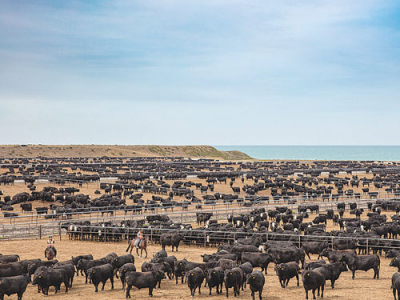
ANZCO’s Five Star Beef feedlot, on the coast at Wakanui, near Ashburton, is now under a restricted place notice. The disease has been confirmed in “a large number” of a single mob of 44 animals, ANZCO general manager, agriculture and livestock, Grant Bunting told Rural News.
The confirmation came a few days after ANZCO revealed that the farm was under a notice of direction (NOD), usually issued to restrict movements on- and off-farm while test results are pending.
Bunting agrees it may only have been a matter of time before the farm got M.bovis, given its business model and the high numbers of animals it handles.
“It’s not as though anyone’s been able to tell us what cattle not to buy,” he says.
Bunting says Five Star will work with MPI to manage the infection. He sees no chance of it infecting more farms because all its animals go to slaughter.
The 44 deemed infected are quarantined and all in one pen, but may go to slaughter earlier than usual.
Bunting says Five Star will take instruction on whether they can simply disinfect that pen while continuing to operate the rest of the feedlot as usual.
“Transmission rates will largely dictate the direction we are required to follow. We are an intensive operation so our risk will obviously be higher,” he told Rural News.
Five Star buys in conventionally pasture-raised 18 to 20-month-old cattle and then finishes them for up to 90 days on rations, about 50% grain and 50% forage-based.
The system gives product consistency to the beef, marketed as ‘grain-finished’.
“From a product perspective you end up with a bit more control over what you deliver,” Bunting says.
The Wakanui brand grain-finished beef is available in many NZ supermarkets. However, 95% of it is exported and the feedlot accounts for only 10% of the total ANZCO beef kill.
Five Star Beef has operated on the site since 1991. It now has about 16,000 animals and consents for up to 19,000.