Milk Powder Prices Prop Up Farmgate Milk Price
Milk powder prices are keeping farmgate prices up, helping processors offset the dip in milk fat prices.




 increase font size

ALL THE SIGNS suggest a prolonged period of low international dairy prices will be required to soak up the current global market surplus, says Rabobank in its latest Dairy Quarterly report.
The report indicates the orderly decline in global dairy prices that became evident in the second quarter of 2014 well and truly set in during the third quarter of the year.
Rabobank analyst Hayley Moynihan says milk production has continued to expand strongly in global export regions, while China has pulled back from buying on the international market as it concentrates on digesting stock accumulated in early 2014, with other import buyers proving unable to take up the slack.
Market rebalancing will be a slow process and price recovery looks some way off, Moynihan says.
Impact for New Zealand
Achieving 2014/15 New Zealand milk price forecasts remains challenging without an earlier-than-expected commodity price recovery, a lower NZD/USD exchange rate or both, the report says.
An ongoing bear market may also see opening 2015/16 milk prices below the historical five-year average level, the Rabobank report cautions. However, Moynihan says, the medium-term outlook for dairy remains favourable with prices expected to trend up towards a more sustainable trading range through the course of 2015.
"The next year promises to be challenging for New Zealand's dairy producers, however the longer-term outlook remains positive, with prices expected to return to more profitable levels for farmers into the 2015/16 season," she says.
"Rabobank firmly believes the current downturn in prices is cyclical, as agricultural commodity prices often are, rather than a more fundamental structural change, and farmers will work hard to 'wait out' the lower price cycle by trimming less-productive farm expenditure or deferring longer term cap-ex decisions."
Global expectations
Exceptional milk production growth in export regions has outstripped weak local domestic consumption, boosting supply on international markets just as China reduced its forward purchases, the Rabobank report says.
Milk production growth in the 'Big Seven' export regions – the EU, US, New Zealand, Australia, Argentina, Brazil and Uruguay – will slow considerably in the coming six months (from 5.1% in the first half of 2014 to 2.7% in the second half to 1.6% in first half of 2015), the report says, as lower prices are passed to producers, exceptionally favourable weather normalises and prior higher growth rates become tougher to exceed.
Moynihan warns, however, the pace of the slowdown in global dairy production will be constrained by falling feed costs, the removal of quotas in the EU from April 2015 and the fact many farmers have not yet even received the signal that the international market is amply supplied.
"This will likely mean that the brakes on milk production will be applied too slowly to avoid a further increase in surpluses over the next 12 months," she says.
On the consumption side, Ms Moynihan says domestic dairy consumption in export regions will slowly improve on the back of higher incomes, employment growth and falling retail prices.
Milk powder prices are keeping farmgate prices up, helping processors offset the dip in milk fat prices.

Chinese beef trade quotas and a looming suspension of Brazilian beef imports into the European Union are expected to reshape global beef trade flows over the remainder of 2026, with implications for New Zealand exporters, according to Rabobank's Q3 Global Beef Quarterly report.
New Zealand consumers are paying more for beef mince than ever before, with the average retail price now sitting above $24 per kilogram, according to Rabobank.
West Otago dairy farmer Luke Kane has been awarded the 2026 Rabobank Dr John Morris Business Development Prize.
Twenty five secondary school students from around New Zealand recently completed a three day residential programme designed to explore career opportunities across the food and fibre production supply chain.

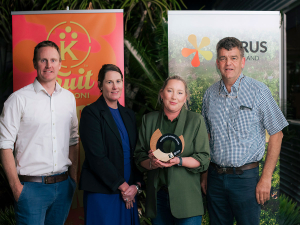
New Zealand's citrus growers were challenged to build their future on the value embedded in their fruit rather than the volume they produce, at Citrus New Zealand's annual gathering in Gisborne on 17 September.
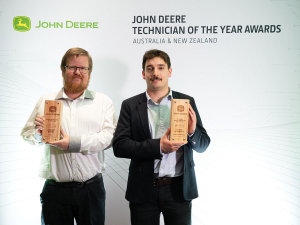
Leading John Deere technicians and apprentices from New Zealand and Australians were recognised at the recent sixth annual JD Technician of the Year Awards, held in Brisbane.
In Dacre, near Invercargill in New Zealand’s South Island, Bruce Dinnington is running a dairy operation unlike any other.
A free online platform aggregating governance vacancies across rural and regional New Zealand has been launched.
Environment Minister Nicola Grigg has announced details of a new rural plastics recycling scheme.
Agricultural drone operators say that a government decision to allow lower-risk drone work without certification won’t lower standards but drive innovation and efficiency.





OPINION: The same mainstream media muppets that brought you Jacindamania in 2017 have been flat out pimping for the Opportunities…
OPINION: Your old mate reckons the atrocious way farmers in the UK are treated by their lords and masters in…