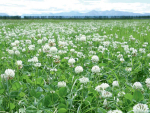
White Clover: Free Nitrogen as Urea Prices Climb
Growing great pasture this season doesn’t have to break the bank.




 increase font size
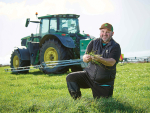
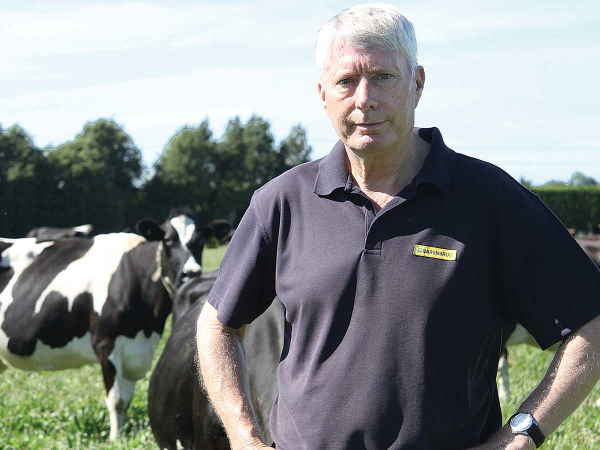 Graham Kerr, Barenbrug pasture specialist.
Fully renewing a Canterbury dairy farm in a mix of Array and 4front ryegrasses could lift profitability by more than $1,500/ha while cutting reliance on imported feed.
That’s according to new FARMAX modelling commissioned by Barenbrug and carried out by Macfarlane Rural Business (MRB).
The study modelled a typical 200ha Canterbury dairy farm milking 3.4cows/ha.
It compared four pasture options, using Nui as the baseline against Governor AR37, Array NEA2 and an Array/4front mix.
While all three newer pasture options delivered gains, Array and 4front produced the strongest results across physical, financial and environmental measures.
Graham Kerr, Barenbrug pasture specialist, says the company commissioned the analysis to quantify benefits of its latest proprietary cultivars compared with old genetics.
“We’re really excited by these results, which reinforce the massive value of producing extra high quality, homegrown feed in our pastoral dairy systems,” says Kerr.
“If you’re sowing a diploid perennial ryegrass Array is a standout. But if you want even more metabolisable energy (ME) with a diploid/tetraploid ryegrass mix, then move up to Array/4front.”
With farmgate returns looking strong for the season ahead, spring is the ideal chance to use these findings to future-proof farm productivity, he says.
The MRB modelling found the two biggest drivers of farm operating profit were growing more dry matter (DM), and lifting feed quality through higher ME.
“The surprising thing that came out of FARMAX was just how much of a difference higher ME can make,” Kerr says.
Moving from Governor to Array increased production by 56 kg MS/ha, which improved operating profit by $584/ha (to $7425) after costs.
“The driver was Array’s extra ME. It’s about 0.5 units higher than Governor from November to February, because it is very late heading and extremely leafy through summer.
“Half a unit of ME might not sound a lot, but it significantly increases cow intakes.”
Kerr says Array is a great option for farmers seeking dense, persistent, diploid pasture.
However, if they want to add a tetraploid to the mix, FARMAX showed sowing a 50:50 mix of Array and 4front improved EFS by another $253/ha (to $7678).
Again, the dollar gain comes from higher pasture quality, in this case because 4front’s ME is very high year-round, Kerr says.
“Not everyone wants tetraploids, as they are a bit less robust. But we have found the Array/4front mix works really well across many farms.”
Environmental indicators also improved.
Greenhouse gas emissions intensity (measured in kg CO2e/ t FPCM) fell with the new pasture cultivars, which is in line with Fonterra’s much publicised emphasis on the critical role of homegrown feed.
“We asked Fonterra to model the different pastures, and going from Nui to Governor dropped emissions intensity 2%. Moving to Array it dropped another 2%. And Array/4front was best, dropping another 0.9%.”
Growing great pasture this season doesn’t have to break the bank.
It's only just hit the market, but a new forage rape bred for dryland farms has already won the approval of lambs and young cattle both north and south.
Keeping cows happy and well fed at home this winter just got easier with the launch of a prolific new annual ryegrass bred to jump out of the ground even faster than its popular predecessor.
New industry trials confirm what matters most for perennial ryegrass seed this autumn: Cool, dry storage keeps endophyte viability above the 70% commercial threshold, according to pasture specialist Barenbrug.
Pasture specialist Graham Kerr claims that one hybrid ryegrass in New Zealand continues to dominate industry yield trials, as it has done every year since it was launched in 2021.

For 15 years, Glenda Rees has travelled from Gore to Awarua, often several times a week, to keep watch over one of the country’s rarest birds.
With some farmers opposing a government-industry partnership set up to develop methane reducing products, one NZ company claims that it already has a product on the market.
During the nesting season, from September to December, industrious starlings can quickly build nests in the darker areas behind tractor and vehicle, usually close to hot engines, typically resulting in localised damage or in some cases complete write-offs.
The meat processing industry is much more collegial than it was in the past and is now more focused on common goals.
With the last couple of months having seen some potential tractor purchases put on hold with the impending election and continued input cost rises, year-to-date figures, ending September, has seen deliveries up around 5% over the same period in 2025, with a total of 2026 units.
Beef+Lamb New Zealand is calling for nominations for director roles in the Northern South Island and Northern North Island electoral districts.


OPINION: It seems Canterbury processor Synlait is still in the doldrums.
OPINION: Get offside with New Zealand First leader Winston Peters at your own peril.