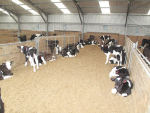
How clean is your cow shed?
A critical way to reduce the spread of disease from one season to the next is by removing soiled bedding and thoroughly cleaning a calf shed.




 increase font size
 Gemma Chuck.
The future reproductive and lactation performance of your herd relies on the optimal management of heifers from birth.
The typical cost of rearing a heifer from birth until first calving at 24 months of age is $1300-1500, excluding labour costs. Growing heifers well allows them to reach sexual maturity at an earlier age, allowing earlier breeding which results in a younger age at first calving. The cost of rearing a heifer is reduced if her age at first calving is reduced.
It is also critical that heifers calve without difficulty, perform well in the dairy and get back in calf easily during their first lactation.
Australian data collected from a year round-calving herd showed that the optimal age at first calving was 24-30 months, as these heifers had the highest first lactation production, highest estimated lifetime production and maximum days of productive life. Heifers calving for the first time at age 30 months or older had decreased first lactation production and fewer days of productive life.
With more heifers entering the herd, the overall herd age will be younger. Younger animals tend to be more fertile and have fewer milk quality issues than older cows as they have had less opportunity to develop mammary infections. A younger herd age also allows selective culling of older animals and any excess heifers can be sold locally or globally as an alternative source of income.
What is the correct weight?
The target body weight for a heifer at her first calving is 85% of her mature body weight. This will vary with breed and genetics. For example, if the average ‘ideal’ mature cow in a herd is 600kg, a heifer should be calving at 510kg. And if the average ideal mature body weight is 650kg, then heifers should be calving for the first time at 552kg.
Heavier heifers at first mating are more likely to show sexual activity than lighter heifers. Therefore decisions on first mating should be based on body weight, not on age. In seasonal and split calving herds, heifers at first mating may be 13-15 months of age. This means the youngest animal in the group must be sufficiently grown for her to have the best chance of getting in calf quickly and easily.
The target body weight at first mating is 60% of her mature cow bodyweight. Commonly, smaller heifers are ‘carried over’ to a younger group so they have more time to grow out prior to first mating. This delay means increased age at first calving which significantly reduces profitability as the heifer has taken more time and money to rear.
Long-term benefits
After first calving, heavier heifers are more likely to show a heat prior to mating start date and have better first service conception rates than lighter heifers. They also have fewer calving problems and have better transition into the milking herd.
The impact of body weight on lactation performance has also been demonstrated. Research has shown that a 50kg heavier heifer at first calving will produce an extra 1041 litres of milk, 38.5kg butterfat, 42.5kg of protein over the first three lactations. In addition to the positive effects on reproductive and lactation performance, heifers with a heavier body weight at first calving live longer than poorly grown heifers. This is likely due to their improved fertility and fewer health problems.
How can I help my heifers to achieve this?
An objective assessment of heifer performance can be achieved by monitoring growth between weaning and first calving. This ensures that the average daily gain of heifers can be monitored so that they can achieve their target weights at the critical times of first mating and calving. Small heifers can be identified early, allowing intervention to reduce the risk of them being carried over to a younger group.
Routine animal husbandry procedures such as vaccination and drenching can be carried out at the same time as weighing to reduce any additional handling or stress.
It is worth discussing heifer performance with your veterinarian to enable correct analysis and interpretation of the data and accompanying nutritional advice.
Source: Heifers on Target, Dairy Australia, 2013.
• Gemma Chuck is a vet with Apiam Animal Health Ltd in Victoria.
A critical way to reduce the spread of disease from one season to the next is by removing soiled bedding and thoroughly cleaning a calf shed.
In recent times there has been much discussion relating to enhanced nutrition (or accelerated growth programmes) in milk-fed calves.
The recent slowdown in Chinese demand for live dairy heifers has many NZ exporters and traders questioning if the boom period is over.
A new dairy grazing site near Taupo will be focused on heifers, says the owner, Wairakei Pastoral Ltd.
It takes about two weeks for heifers to get to know the milking area, entry and exit routes, and to establish a quiet, reliable routine.

Farmer-owned fertiliser company, Ballance Agri Nutrients is welcoming National’s plan to negotiate security agreements with key supplier countries to protect New Zealand-bound products from export restrictions and greater supply chain certainty.

Carrfields has announced the appointment of Stu Hall to the newly created role of chief operating officer, Carrfields Ltd, reflecting the continued growth of their agribusinesses and the need to ensure the company has the leadership capacity and support in place as it pursues the emerging opportunities ahead.
New Zealand's role is not to compete with Indian growers, according to NZ Apples and Pears.
The potato industry is celebrating the success of two rising stars - James Blair, the 2026 Young Grower of the Year and runner-up and innovation award winner, Amber Davy.
Twenty-eight emerging leaders from across the horticulture sector spent two days last month learning valuable skills and connecting with industry experts.
There are five entrants in this year’s Young Horticulturist of the Year, competing in a series of technical, practical, business and leadership challenges.
OPINION: It seems Canterbury processor Synlait is still in the doldrums.
OPINION: Get offside with New Zealand First leader Winston Peters at your own peril.




