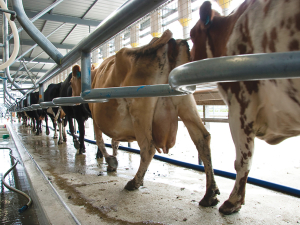
Genetics can help dairy farmers take steps this season to reduce their emissions while they wait for further new tools and technologies to be developed, says CRV managing director James Smallwood.
"Dairy farmers in New Zealand want to breed cows that are more productive, last longer in the herd and convert feed more efficiently into milksolids.
"And as they achieve these results, herds will naturally have a lower environmental impact. Breeding for lifetime production also means farmers require fewer replacement heifers, which is a significant cost saving," he says.
For some farmers, efficient production is more important than maximum production.
Smallwood says breeding for efficiency means cows require fewer raw materials, such as feed and fertiliser, to produce each kgMS, which is more important than ever given rising input costs.
"Breeding feed efficient cows will help New Zealand produce more milk from less feed while reducing agricultural emissions. It's a win-win for everyone."
Smallwood says there is no doubt that genetics will play a key role in helping dairy farmers meet their emissions reduction targets, while maintaining milk production.
"However, the seasonal nature of dairy farming means trial work takes several years of data generation and analysis to prove the solutions work before those genetics can be delivered to farmers.
"But they don't have to wait. I urge dairy farmers to look at health and efficiency traits they can breed into their herds this season so they can start locking in genetic gains that will have long-term future benefits for their business."
CRV's feed efficiency trials in the Netherlands are an example of the investment the company is making in longer-term research and development to find solutions.
"Back in 2017, CRV was the first breeding company in the world to invest in collecting feed intake data from individual cows on commercial dairy farms," he says.
"Since December 2021, our team in Holland has collected feed intake data from over 8,700 cows. With 4 million records of feed intake measured per year, CRV has the biggest reference population with respect to feed intake data from individual cows."
 |
|---|
|
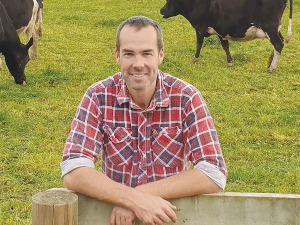
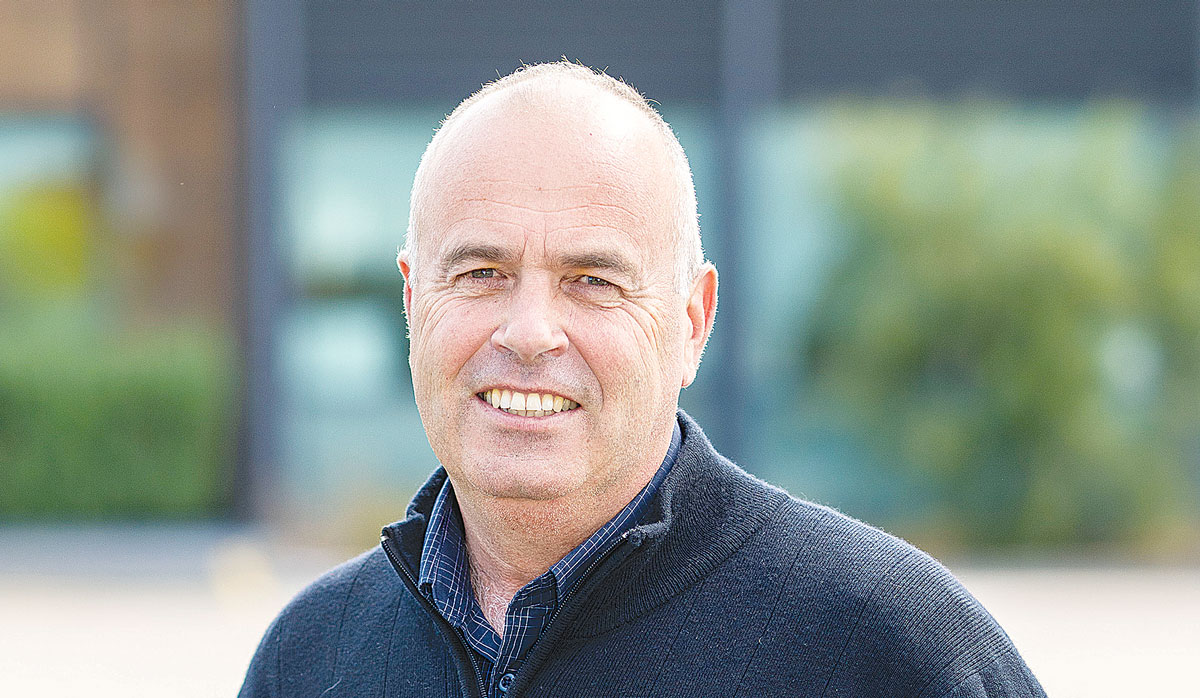
CRV managing director James Smallwood.
|
The New Zealand dairy industry is yet to find technology to accurately measure feed efficiency on our pasture-based system. But Smallwood says work is underway.
"With the development of agri-technology, such as wearable neckbands, work is already happening to measure the time animals spend grazing and their rumination levels, which could help measure their feed efficiency."
Bull Methane Emissions Study
Another project in the pipeline is a pilot trial by CRV and LIC, with funding from the New Zealand Agricultural Greenhouse Gas Research Centre (NZAGGRC), to measure bulls' feed intake and methane emissions - in the form of burps.
By 2024, the first sires included in the trial will have lactating daughters. Then the methane emissions of those daughters can be measured and compared to those of their sires to confirm if there's a genetic link.
Smallwood says farmers' animals are one of their biggest assets, so potential solutions to reduce cow emissions from genetics will offer real value to our industry.
"All this research and development takes time, but it has the potential to give farmers more solutions to help lower methane emissions per unit of feed eaten. Maintaining our competitive advantage on the world stage depends on it.
"Farmers need to start breeding for health and efficiency traits this season to help them unlock the further potential of their farm business while reducing environmental impacts going forward."