How Kereru Farm Turned Around Triple Drench Resistance
When Simon Hales discovered triple drench resistance on his Weber farm, it was a catalyst to fast-track farm system change.




 increase font size
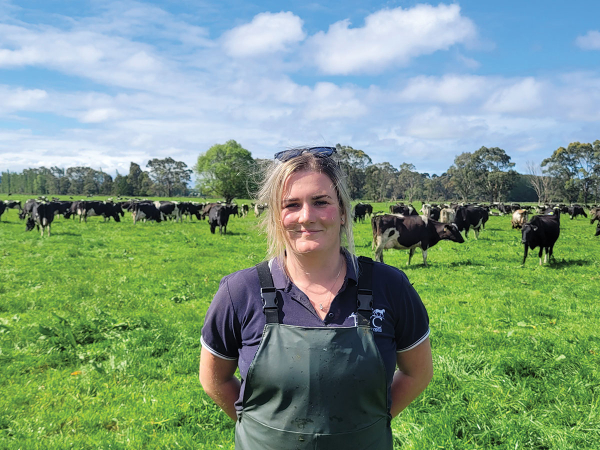 Kellie Grieve, large animal technician at Rangiora Vet Centre.
Mid-season on farm is where good habits are tested. Workloads build, the days stack up, and what felt straightforward at the end of the season can begin to feel like a grind. It is also the point where small lapses in consistency can creep in, often without anyone noticing in the moment.
To get a real-world view of how the season is tracking, animal health company Zoetis spoke with Kellie Grieve, large animal technician at Rangiora Vet Centre, who is currently in the thick of it.
While cow dry-off has not fully ramped up yet, heifer teat sealing is well underway.
"We have sealed just over 5,000 heifers so far, and it has been going really well," says Kellie Grieve.
"Conditions have been relatively dry, so the heifers have been clean and easy to work with. They are in great body condition too, which makes a difference."
It has been a smooth start so far, but she is clear that this is just the beginning.
Early season energy does not last.
"At the start, you are mainly focused on heifer teat sealing and everyone is fresh," she explains.
"As we move further into May and June, everything starts to stack up. We are doing body condition scoring, udder health checks, drying off herds, and milk sampling as well."
That increase is workload brings a shift in focus. "For us, it becomes about being efficient while still making sure we are getting the job done to a high standard and not cutting corners."
It is not usually knowledge that causes issues mid-season. It is fatigue.
"When time pressure builds and people get tired, that is when hygiene can slip," Grieve says.
"Things like properly cleaning the teat end or washing and drying hands between animals can get rushed."
Difficult animals can also test consistency. "If you have a really kicky heifer and you are already exhausted, there can be a tendency to rush rather than taking the time to ask for help."
Importantly, this is not limited to less experienced technicians. "Even experienced technicians can become complacent as workloads increase. That is why consistency across the whole team is so important."
Despite the pressure, the fundamentals have not changed.
"The biggest difference comes down to getting the basics right and being consistent with them," says Grieve.
Hygiene remains one of the most important factors. "Making sure cleaning protocols are followed and not cutting corners when things get busy."
"That includes wearing gloves and sleeves, keeping equipment clean, and taking the time with each animal to make sure it is done properly."
For cow dry-off, it does not stop at administration.
"Aftercare is also very important. That includes having the dry-off diet sorted with the primary vet, returning cows to clean pastures, and avoiding unnecessary movement for at least a week. They also need to be monitored closely in the first 24 to 48 hours."
Team culture plays a big role in maintaining standards.
"We work closely together, so communication makes a big difference," Grieve explains.
"If you notice someone doing something slightly off, a quick reminder is often all it takes."
That applies across all experience levels. "Even experienced technicians can benefit from a reminder now and then."
Managing fatigue is just as important.
"Some days can be a slog. Having a good team spirit, helping each other out, and staying positive can make a big difference," she says.
If there is one takeaway for the rest of the season, Grieve is clear.
"Hygiene. Take your time." Even in less-than-ideal situations. "If you have a difficult animal, do not rush it. Ask for help. It is not worth cutting corners."
Because at this stage of the season, those small decisions repeated every day are what ultimately show up at calving.
Article by Zoetis
When Simon Hales discovered triple drench resistance on his Weber farm, it was a catalyst to fast-track farm system change.

Solid biosecurity practices, regular monitoring and timely vaccination are the three key pillars of effective Bovine Viral Diarrhoea (BVD) control on New Zealand farms. Zoetis veterinary technical advisor, Karley DeFrees, explains BVD is a costly but preventative disease that impacts a significant number of dairy farms in New Zealand. Implementation of a BVD control plan can help protect your herd from this avoidable disease.
Clostridial diseases are a major cause of sudden death in young lambs and calves, and for King Country farmer and veterinarian, Stacey Turner, vaccinating with Ultravac 5in1 is a non-negotiable animal health practice.
Healthy, well-grown calves are the building blocks of any future dairy herd. Giving them the best start to life is crucial, and the primary strategy to reduce the burden of disease caused by rotavirus infection is vaccination.
Dry-off feels like a break. For the cow, it's anything but.



Now in its fourth year, the 2026 Fencing Industry Awards, formed part of the proceedings of the FCANZ Conference, held in Nelson during August.
DairyNZ deputy chair Cameron Henderson has been re-appointed unopposed for another term.
OPINION: The stats speak for themselves.
Farms across the upper North Island are trialling different pasture mixes as part of a research programme that aims to build greater resilience into farming systems.
Election years are always a concerning time for farmers, according to DairyNZ chair Tracy Brown.
The Ballance Farm Environment Awards are coming to the West Coast of the South Island.


OPINION: It seems Canterbury processor Synlait is still in the doldrums.
OPINION: Get offside with New Zealand First leader Winston Peters at your own peril.