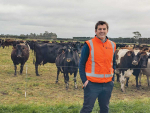
New Dairy Holdings CEO Backs Self-Contained Model
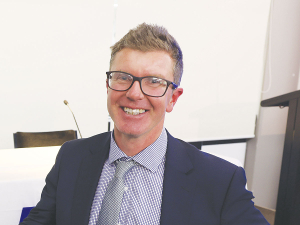
Running a tight and self-contained ship is the key to the success of the country's largest dairy farmer, says Blair Robinson, the new man at the helm of Dairy Holdings.




 increase font size
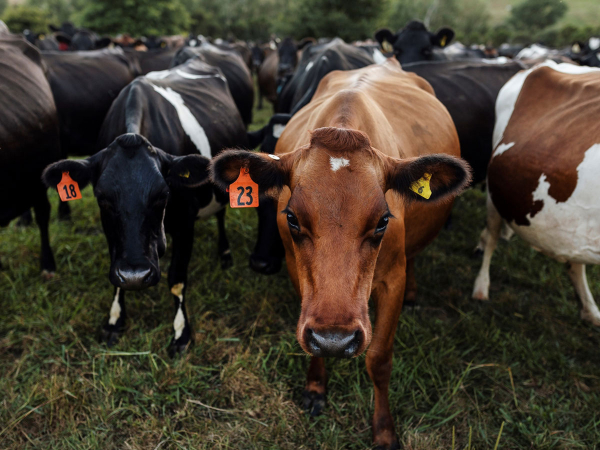 The last known infected property in Mid- Canterbury has been destocked and declared disease-free, taking NZ to zero confirmed infections of M. bovis.
New Zealand may have achieved a world first by effectively eradicating Mycoplasma bovis (M. bovis) - a task that many people claimed was impossible.
Biosecurity and Agriculture Minister Damien O'Connor says the last known infected property in Mid-Canterbury has been destocked, and declared disease-free, taking NZ to zero confirmed infections.
He says while there were brief periods in the past when there were no infections there was still possible cases being investigated.
"This is the first time we've had no cases and no investigations, but it will take five more years to really confirm the absence of M. bovis in our herds," he told Dairy News.
It's taken five years to get to this point and O'Connor says it's the result of hard work, sacrifice, and collaboration between Ministry for Primary Industries (MPI), DairyNZ and Beef+Lamb NZ. O'Connor also acknowledges the hardship which affected farmers and families have felt during this time.
He says no one else in the world had done an eradication programme so the team running it had to constantly adjust, improve, adapt and learn as they went along. O'Connor says they had to develop new tracing systems, which led to the improvement of NAIT and overall it took the efforts of hundreds of people to achieve the outcome we have now.
"I also want to thank the broader sector who've stepped up their animal tracing efforts, allowing us to move the programme on to a new surveillance phase," he says.
During the five-year eradication programme almost 184,000 cattle have been culled, 280 farms depopulated and nearly 3,000 farms subject to movement controls. The Government also paid out $247.6 million in compensation to affected farmers.
O'Connor says the overall cost of the eradication programme was in the order of $650m and was funded jointly by the industry bodies and government. "But the advice I had, and the observations we saw in NZ, the effect on mastitis, lameness, abortion and the requirement to wind back the intensity of our farm systems would have cost billions of dollars in lost production and changed farm systems if we had to farm with bovis," he says.
O'Connor says as NZ becomes clear of active M. bovis infection and work centres on background surveillance, the time is right to transition to a new model to continue to build our farming sector's resilience and strengthen the biosecurity system.
But he says as part of the surveillance programme there will be ongoing milk sampling, probably twice a year when cows are more stressed and are likely to shed M. bovis cells into the milk, so we can detect its presence.
He says there will also be ongoing testing at the freezing works for the national beef herd.
Running a tight and self-contained ship is the key to the success of the country's largest dairy farmer, says Blair Robinson, the new man at the helm of Dairy Holdings.
OPINION: It's no surprise that "world-class biosecurity" continues to dominate as the top priority for agribusiness leaders, holding the number one spot for the 16th consecutive year in KPMG's latest agribusiness report.
A miserable budget that didn’t deliver much for anyone.
National's decision to ‘dribble’ information about the NZ/India to Labour contributed to the delay in it deciding to supported the FTA.
When it comes to international trade, politicians from all sides of the aisle are united, says Labour's trade spokesman Damien O'Connor.


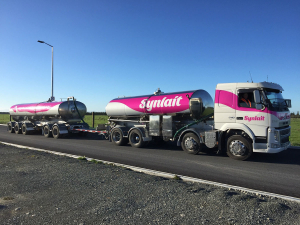
Synlait has swung to second-half profit as operations stabilise, but the dairy processor still posted a $75.4m annual loss.
LIC shareholders have elected a new North Island representative to the co-operative's Board, along with five representatives to its Shareholder Reference Group (SRG), following the company's Annual Meeting held in Invercargill.
Farmers across parts of Southland and South Otago are continuing to deal with difficult conditions after a prolonged run of wet weather, with pressure building around feed supply, stock management, pasture damage, farm infrastructure and everyday workloads.
Federated Farmers says it welcomes Labour's commitment to reviewing the Sharemilking Agreements Act, calling on other major parties to do the same.
For Canterbury dairy farmers Sian Meijer and Rick Wobben, wearable technology has become one of their most valuable on-farm tools - helping manage 1850 cows across an expansive, high-performing dairy operation while improving efficiency, mating outcomes and day-to-day decision making.
Fonterra has unveiled its annual results for the 2026 financial year, posting $27 billion in revenue and close to $20 billion returned to New Zealand farmer owners and unit holders.
OPINION: It seems Canterbury processor Synlait is still in the doldrums.
OPINION: Get offside with New Zealand First leader Winston Peters at your own peril.




