Why Now Is the Time to Plan Farm Succession, Findex Says
OPINION: Succession and long-term planning are perennial topics because it is perpetually sidelined on busy farms.




 increase font size

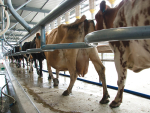
The Jersey breed was one of the foundation stones of the New Zealand dairy industry; not so today with the number and popularity of these brown cows diminishing initially in favour of the larger-framed Friesians but more latterly for crossbreds.
But the pendulum could be about to swing back.
Until the late 1960s, the Jersey breed accounted for 70% of the national herd, today it's at 12.1% and that, according to LIC jersey bull acquisition manager Malcolm Ellis, "is a dilemma - not just for the breed but for the whole industry.
"The industry is better with Jerseys, it is one hell of a breed that's worth fighting for and there's a lot to be excited about now and in the future with the work we're doing.
"Based on the amount of milk solids they can produce for each kg of liveweight, Jerseys have a tremendous reputation for being a highly efficient breed, and I've seen farmers make this breed work across all systems.
"A system 5 Jersey farm I visited recently, for example, has a top cow just short of 500kgs liveweight - and it's going to hit a tonne of milk solids this season. Their 2-year-olds consistently exceed 600kgs milk solids in their first lactation which is 1.18 times their liveweight.
"That's massive, and it doesn't stop there - in system 3 and 4 farms I've seen 400kg Jerseys nailing up to 460kgs milk solids each, while system 1 and 2 rockets are also cracking the magical 1kg of milk solids for every 1kg of liveweight.
"These farmers are making the breed work for them, but the biggest problem facing Jerseys right now is they're currently running fourth in a three-horse race when it comes to farmer's mating choices, and their gene pool is getting lower each season."
New Zealand dairy farmers understand Breeding Worth (BW) as a basis for bull selection and a goal for their herd but Malcom says declining numbers mean the Jersey teams just haven't been up there in recent years so some have understandably made the switch to the popular Kiwicross.
"The Jerseys have got to regain BW respect because I know in this game, if you don't rock on the wall chart then you don't perform because that is what farmers base their decisions on.
"They're in a race against time to recapture genetic gain, but we've got to balance that with diversity in the genes too."
The Kiwicross™ cow is the most popular in New Zealand, but Malcolm says its continuity is enhanced with strong parent breeds, Jersey and Holstein Friesian, which allows the blend of traits that farmers want.
OPINION: Succession and long-term planning are perennial topics because it is perpetually sidelined on busy farms.
Farms across the upper North Island are trialling different pasture mixes as part of a research programme that aims to build greater resilience into farming systems.
Election years are always a concerning time for farmers, according to DairyNZ chair Tracy Brown.
Matt Collier, Probiotic Revolution, says calves will drink a lot of milk once-a-day with their probiotic Calf Xtreme.


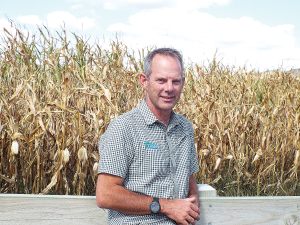
Surprised, humbled and quite thrilled. That’s the reaction of James Allen, one of the founding partners and now chief executive of AgFirst, on being made a life member of the Institute of Rural Professionals.
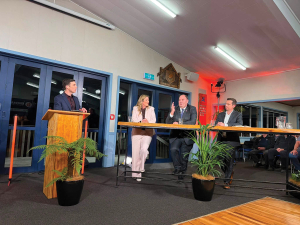
It was billed as a chance for all the political parties to woo the rural vote, but question marks hang over just how effective this was.
Minister of Conservation Hon Tama Potaka has appointed Susan O'Regan as Chair of the Queen Elizabeth II National Trust (QEII) for a three-year term.
Red meat farmers are welcoming Labour’s plan to review the Emissions Trading Scheme and not to campaign on pricing agricultural emissions.
Where any worker in the kiwifruit industry is mistreated, we expect the authorities to take action.
Mid Canterbury Federated Farmers arable chair, Bevan Lill, said Beef + Lamb NZ data indicated that for the last six years, the average arable return on investment was about 0.8% while inflation ran about 4% - so the average arable farm was going backwards at about 3% a year.


OPINION: It seems Canterbury processor Synlait is still in the doldrums.
OPINION: Get offside with New Zealand First leader Winston Peters at your own peril.