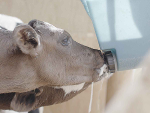
Calf rearers say goodbye to leaky teats, poor feeder fit
Leaky teats and poor feeder fit are now a thing of the past for calf rearers - thanks to the Thriver range of calf teats from Skellerup.




 increase font size
 Skellerup is celebrating a record profit.
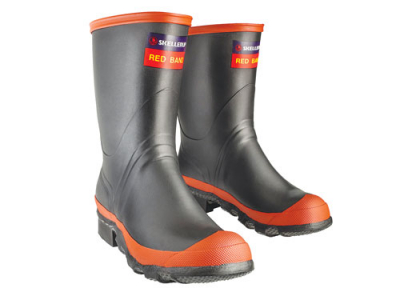
In the year Skellerup’s iconic Red Band gumboots turn 60, the company is celebrating a record profit.
Tabling its annual result for the year ended June 30, the plastics and rubber manufacturer reported revenue of $240.4 million, up 14% on the previous corresponding period (pcp), record earnings before interest and tax (EBIT) of $39.8m (+21% on pcp) and a record net profit after tax of $27.3m (+23% on pcp).
The company’s agri division, which makes Red Bands, milking platform wheels, milking cup liners, tubing, pumps, heat exchangers and teat sprayers, contributed $22.8m to EBIT, up 15%.
The industrial division, which makes components such as seals and valves -- often critical parts in other company’s products -- contributed $20.8m, up 21%.
Chief executive David Mair said the agri division achieved an excellent “record result, continuing steady growth particularly in global markets”.
“We develop innovative and high quality dairy components and specialist footwear designed and manufactured to meet the specific needs of customers.
“The completion of our new factory at Wigram in 2016 and the subsequent sale and disposal of the Woolston site have enabled our agri team to develop an external focus on customers and growth. We are beginning to see the benefits of this strategy, with revenue increasing by 12% to $89m in the current year.”
Mair said New Zealand is agri’s largest single market, but international markets contribute at least half the revenue and have growth prospects.
“This is driven by a growing Asian middle class and global demand for milk protein. Our dairy rubberware, milk filters and animal hygiene products play a crucial role in maintaining milk quality and protecting animal health.”
Mair noted Skellerup’s fame in NZ for its Red Band gumboots, first made in October 1958.
“Leveraging this long-established technical know-how we develop and grow our footwear range, including our fire-fighters’ boots that are worn in NZ and Australia and now by many UK fire brigades.”
Leaky teats and poor feeder fit are now a thing of the past for calf rearers - thanks to the Thriver range of calf teats from Skellerup.
Rising sales of dairy consumable products helped Skellerup deliver a record net profit of $48 million last financial year.
It's a change of scenery, customer and supply chain for Skellerup’s incoming agri division head, Hayley Gourley.
Dairy rubberware supplier Skellerup is giving its support to I Am Hope, a community group.
Filling the vat with the best milk you can produce is a financial advantage, says milking liner maker Skellerup.


Federated Farmers has welcomed new rural policies released by ACT, saying they align closely with its own election priorities.

Rural Contractors NZ says proposed changes to land transport rules for agricultural vehicles are a welcome response by the Government to out of date regulations which have seen members hit with huge fines.
Alliance is calling for final applications for its 2027 Graduate Programme, with applications closing on Sunday 25 October.
Decades piloting planes has ensured vet and farmer David Hayes is focused on safety. So, after a serious accident while welding on farm, he is sharing his experience so others can learn from it.
Canterbury milk processor, Synlait Milk has confirmed Leon Fung as its chief executive officer.
OPINION: Making it easier to collect rainwater and use it to grow crops and livestock is a no brainer.

OPINION: It seems Canterbury processor Synlait is still in the doldrums.
OPINION: Get offside with New Zealand First leader Winston Peters at your own peril.




