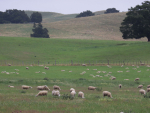
Hawke’s Bay sheep and beef farmers warned to monitor stock water wells
Sheep and beef farmers in Hawke's Bay are being urged to keep a close eye on the wells that supply water to their stock.




 increase font size

MOST DAIRY farms are only slowly emerging from the drought that has been a sharp shock to farm management plans this summer. For most farms the production season has ended abruptly, and prospects for autumn and winter have been affected dramatically.
Regardless of cause, such events reinforce how much the management of adverse events depends on the timing and execution of decisions. What are the key ingredients of an effective response?
It has long been recognised that the difference between the top 10% of farming operations and the next group down is their timing. Most operations respond to adverse events with similar strategies; what separates the two groups is that the top 10% group not only does the right thing, they also do it at the right time. This requires quality information, consultation with professionals to secure ‘sounding board’ opinions, and proactive communication with key stakeholders – especially financiers.
Firstly, ensure decisions are based on credible information, not just on imagination. As pasture growth rates, climate outlooks and soil moisture deficits change by the day, planning a farming operation becomes a rollercoaster ride.
The usual reference points available during a more typical transition between seasons are less available so the impact on feed reserves, cow condition and production forecasts becomes much more difficult to measure.
Farmers who put extra effort into securing reliable information and analysis of their position are better positioned to respond. Almost all the operations I work with have a farm supervisor or agronomist involved in their on-farm planning. A key benefit of this is that they build up a history of accurately measured data on farm and herd performance.
This offers even more advantage during times of climate challenge through greater accuracy of planning and budgeting. A key strength is an objective view benchmarked against similar operations for improved perspective.
Collaborating with these professionals when forecasting financial effects adds significant value through greater confidence in budget assumptions. Synergy between clients and their professionals enables robust assessment of all likely scenarios -- especially the worst-case outcomes that can be tempting to avoid.
The next priority is to keep financiers and other key stakeholders informed.
The policy of delivering bad news early ensures everyone has time on their side. This usually results in a more constructive response as financiers recognise that everything possible is already being done to mitigate the effect of adverse events. It has been pleasing to see supportive response of banks during these difficult times.
Perhaps the most important objective in these situations is to ensure the impact on the business is as much as possible ‘ring fenced’ to the current season. This is illustrated by the current situation where the likelihood that milk prices will rise because of international shortages of dairy products will most likely flow through to improved prices next season.
Those who have had the courage to make the hard decisions about the current season and protect next year’s output are likely to be well rewarded. It’s not easy to forego the perceived cashflow benefits of continued production. However ensuring herd condition and pasture covers are on track to achieve the best production next season is likely to be a much more profitable strategy.
The final and most important step is to ensure everyone’s mental approach remains right. Local and national news media again seem to have been obsessed with negative comment about the drought. You cannot get away from this, but you can limit your exposure to it. Keeping work/life balance right, planning proactively, working closely with financiers and sharing concerns with family, friends and business associates will increase the chance of coming out on top.
• Kerry Ryan is a Tauranga agribusiness consultant available for face-to-face or online advice and ideas. Contact him at www.kerryryan.co.nz
Sheep and beef farmers in Hawke's Bay are being urged to keep a close eye on the wells that supply water to their stock.
Fears of a serious early drought in Hawke’s Bay have been allayed – for the moment at least.
OPINION: Farmers along the east coast of both islands are being urged to start planning for drought as recent nor'west winds have left soil moisture levels depleted.
As you approach Hastings from the south along SH2, the colour of the west-facing hills are a good indicator of a drought.
New research could help farmers prepare for a future where summer rainfall is increasingly unpredictable and where drought risk is rising, no matter what.


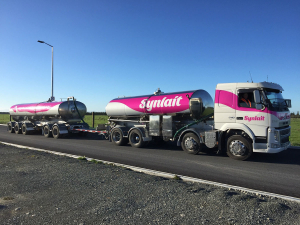
Synlait has swung to second-half profit as operations stabilise, but the dairy processor still posted a $75.4m annual loss.
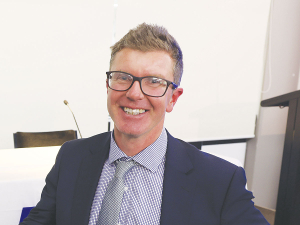
LIC shareholders have elected a new North Island representative to the co-operative's Board, along with five representatives to its Shareholder Reference Group (SRG), following the company's Annual Meeting held in Invercargill.
Farmers across parts of Southland and South Otago are continuing to deal with difficult conditions after a prolonged run of wet weather, with pressure building around feed supply, stock management, pasture damage, farm infrastructure and everyday workloads.
Federated Farmers says it welcomes Labour's commitment to reviewing the Sharemilking Agreements Act, calling on other major parties to do the same.
For Canterbury dairy farmers Sian Meijer and Rick Wobben, wearable technology has become one of their most valuable on-farm tools - helping manage 1850 cows across an expansive, high-performing dairy operation while improving efficiency, mating outcomes and day-to-day decision making.
Fonterra has unveiled its annual results for the 2026 financial year, posting $27 billion in revenue and close to $20 billion returned to New Zealand farmer owners and unit holders.
OPINION: It seems Canterbury processor Synlait is still in the doldrums.
OPINION: Get offside with New Zealand First leader Winston Peters at your own peril.




