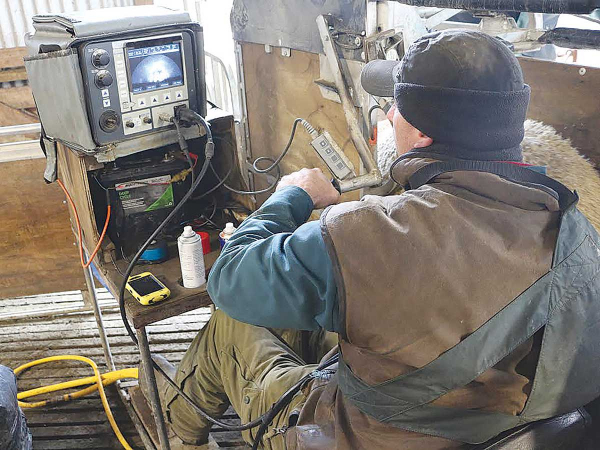
While most rams have yet to go out, farmers are being encouraged to book their sheep scanners in early.
The call comes in case of any possible shortages of scanner availability due to Covid-19 border entry restrictions.
Beef+Lamb New Zealand’s senior advisor biosecurity and animal welfare, Will Halliday, says getting an understanding of the scale of the shortage now will enable the industry and Government to put steps in place to allow the entry of these critical workers, provided they meet the criteria.
He says the Ministry for Primary Industries has expressed concern about the lack of people not booking space in isolation hotels for critical primary sector workers such as scanners.
The critical worker border exemption is now led by Immigration NZ (INZ) and employers must apply to INZ on behalf of their employees to ensure they meet the criteria for ‘critical worker’.
Halliday says he has been engaging with the Government, Federated Farmers, the New Zealand Veterinary Association and sheep and beef vets to highlight the issue and he is encouraging sheep farmers to book their pregnancy scanners now.
“While it seems very early to be thinking about scanning, Covid-19 restrictions mean we cannot call up scanners from other parts of the world as we have in the past. It is important farmers and the industry plan ahead so applications can be made for critical worker border exemptions and where permitted, managed isolation booked well ahead of winter.”
He says employers bringing scanners into the country should not be deterred if they were turned down last year.
“Processes have changed and I would encourage them to apply again.”
Scanning is an important management tool which has significant benefits for feed management and animal welfare. Traditionally, scanners have been brought in from the Northern Hemisphere and Australia to help local scanners carry out pregnancy scanning from May through to August.