It's The Margins That Matter
OPINION: It appears to be difficult for people who haven’t tried to run a business to understand the difference between assets and cash.




 increase font size
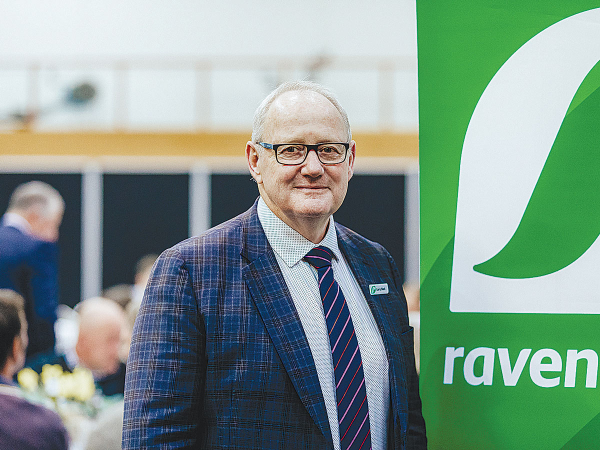 Ravensdown's new chief executive Garry Diack.
Ravensdown farmer shareholders will get $33 million in rebates for the 2020-21 financial year.
This follows the co-operative announcing a profit of $53m for the year, compared to $67m the previous year.
Ravensdown says that gearing up for the growing demand for farm environment planning and investing in future capabilities meant it could not match the previous year’s record profit.
“We were right to view 2020-21 with cautious optimism,” says chairman John Henderson.
“Our shipping joint venture and long-term relationships with reliable suppliers proved extremely valuable as the supply disruption resulting from the pandemic impacted so many other industries.
“Along with sustained focus on product availability, we will continue to invest in the science, technologies and services that can help the ag sector thrive into the future.”
Taking care of its own environmental footprint – carbon emissions, asbestos removal, new stormwater systems and dust control – is a priority for the co-op. It says it has also been helping many more farmers accommodate upcoming regulation.
The customer-facing team invested a significant amount of time adding to their expertise, Ravensdown says. The time spent on training in order to improve its ability to help farmers with their farm environment plans (FEPs) was four times greater than the previous year, but only a 0.5% increase in training spend.
Nearly $6 million was invested in R&D with a focus on the environmental benefits of nutrient use efficiency. Research concentrated on better soil testing for soil nitrogen to avoid over-application, coated nitrogen products that reduce losses to air or water, and a HawkEye “heat map” that helps assure compliance with the new national N limit of 190kg/ ha. The fertiliser industry as a whole reported a reduction of 8% in the supply of total manufactured nitrogen last year.
Ravensdown says that more precise aerial diagnostics and spreading technologies meant fertiliser was not applied on 42,000 hectares of hill country farmland which had been identified as not in need of nutrients.
In terms of its own greenhouse gas footprint, the co-op’s core emissions reduced by 9% and are tracking well towards its target of a 30% reduction by 2030 (16% reduction against base year 2017-18).
Ravensdown’s new chief executive Garry Diack says this is a strong result in a Covid-ravaged world and highlights its role in helping New Zealand earn vital export income.
“A better New Zealand depends on smarter farming, more than it ever has.”
He says in the year ending 31 May 2021, the team worked incredibly hard to secure the flow of essential nutrients so that they were available to farmers and growers in the right amount at the right time.
“Rising shipping prices and risks of supply disruption in a world where global demand for fertilisers is increasing, highlights the value of all the effort to ensure nutrient availability.”
Forecast revenue is $712 million – 5% down on 2020 revenue due mostly to global price rises for raw materials and commodities.
OPINION: It appears to be difficult for people who haven’t tried to run a business to understand the difference between assets and cash.
OPINION: In the 1980s, concern was expressed in West Germany about the falling birth rate. Some simple analysis was performed by Professor Helmut Sies, physician and biochemist at Dusseldorf University. His letter ‘A new parameter for sex education’ was published in Nature in 1988:
When it comes to annual rebates, it's been a long time between drinks for Ravensdown shareholders.
Ravensdown has reported a net profit before tax and rebate of $50.1 million for the year ended 31 May 2026.
Farmer owned co-operative Ravensdown has signed a two-year naming rights sponsorship of the Canterbury A&P Show.
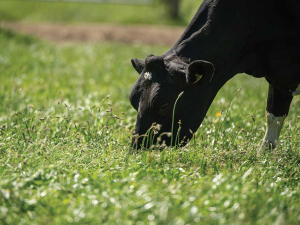
Farms across the upper North Island are trialling different pasture mixes as part of a research programme that aims to build greater resilience into farming systems.
Election years are always a concerning time for farmers, according to DairyNZ chair Tracy Brown.
The Ballance Farm Environment Awards are coming to the West Coast of the South Island.
Most dairy regions around the country have had a pretty good season so far says Tracy Brown.
Rural leader Mark Hooper has been appointed as an independent director to the NZPork board, bringing extensive farming, governance and advocacy experience to the role.

OPINION: It seems Canterbury processor Synlait is still in the doldrums.
OPINION: Get offside with New Zealand First leader Winston Peters at your own peril.