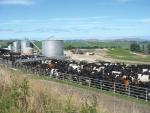
Dairy Sector Drives Strong Rural Property Market Activity in NZ
The latest data from the Real Estate Institute of New Zealand (REINZ) reveals a mixed rural property market due to consistent inflation concerns.




 increase font size
THE RURAL real estate market is seeing a sustained recovery in turnover and price, judging by the latest figures from the Real Estate Institute of New Zealand.
But rural market spokesman Brian Peacocke, Waikato, says business still isn't back to normal.
"It's increased over the past three months but from a very low base.... There's still a decided air of caution out there, among purchasers in particular," he told Dairy News.
Sales are going through where both parties' expectations are realistic. Where there's a sticking point, it's generally because vendor expectations still haven't adjusted to lower market values, he adds.
Grazing properties topped the turnover table for the three months ended February, making up over half the 351 farms sold. That volume is 72% up on the same period a year previously, though the median value was only a whisker up at $21,641/ha, compared to $21,266/ha. To February 2010 the median was $19,188/ha.
Dairy farms accounted for 61 sales at a median of $34,223/ha, down from $36,687/ha across 50 sales a year previously. In 2010 the figures were $31,203/ha on 34 sales.
Peacocke says it's impossible to say how many grazing or other non-dairy properties are being bought with the intention of conversion but notes 50-70 South Island farms are expected to convert this year.
However, one recent cropping farm sale in Canterbury, completed too late to be included in February's figures, indicates that in places cropping farmers are fighting back, going through at $42,000/ha.
"If you converted that to dairy you'd be looking at $60,000/ha. That's well ahead of what you could buy an established dairy farm for in the area."
Fonterra's 15c/kg payout forecast cut earlier this month will have little impact on the market, he believes, as it was "not unexpected."
"I think most people are relatively comfortable with where it's at and the payout's coming from a relatively high base."
With most farms having a good season, increased production largely compensates for the lower price in any case, he adds.
"There is a degree of wariness that this might be the start of further reductions, but a lot will depend on the [2012-13] payout forecast announcement in May.
"Most people are budgeting conservatively now; that may be at $6/kgMS instead of $6.20/kgMS."
As for where the buying interest is coming from, Peacocke says the "predominant buyer is always the family farm interest."
However, there's an increase in investor interest, driven by a motivation to find a safe haven for money, rather than realising a high rate of return.
"Corporate-type buyers are reasonably active too."
A $29 million, 898ha dairy farm sale in Southland went to such a buyer, he notes.
Overseas interest continues, particularly in the lower half of the South. Some is from ex-pats looking to come home, and there's continued interest from Europe. "People seem to gloss over that and isolate the Crafar deal."
The latest data from the Real Estate Institute of New Zealand (REINZ) reveals a mixed rural property market due to consistent inflation concerns.
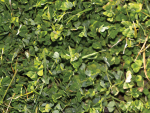
Farmers wanting to establish subterranean clovers in their pastures this autumn are encouraged by Beef + Lamb NZ to graze pastures down to 700-1000 kg DM/ha prior to sowing.
The Real Estate Institute of New Zealand (REINZ) has released its latest rural property report, providing a detailed view of New Zealand’s rural real estate market for the 12 months ending December 2025.
Animal welfare is of paramount importance to New Zealand's dairy industry, with consumers increasingly interested in how food is produced, not just the quality of the final product.
Recent widespread autumn rain will have triggered the germination of subterranean clover seeds, and the resulting seedlings should be allowed to reach the 3–4 trifoliate leaf stage before grazing, says Beef+Lamb NZ.


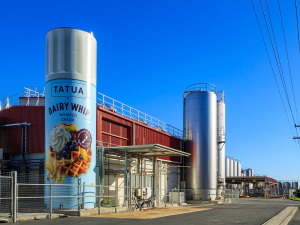
Waikato milk processor Tatua has again declared a record milk payout to farmer shareholders, leaving other processors in the dust.

A Labour-led Government won’t be bringing back the controversial freshwater rules of 2020.
National’s much-touted free trade deal with India featured in the Rural Issues Debate at Mystery Creek, Hamilton on Wednesday night.
New Zealand's 2026-27 freshwater fishing season has opened, with anglers encouraged to head to rivers and lakes over the coming days as conditions look favourable across much of the country.
Central Otago District Council (CODC) has voted against a plan to spread treated sewage sludge from Cromwell and Alexandra on farmland near Lauder, a decision Federated Farmers says reflects strong opposition from rural residents.
Pāmu has released its FY26 Integrated Annual Report, reporting a Net Operating Profit of $113 million, more than double the $49 million recorded in FY25.

OPINION: It seems Canterbury processor Synlait is still in the doldrums.
OPINION: Get offside with New Zealand First leader Winston Peters at your own peril.




