Rural Mobile Coverage Worse After 3G Shutdown, Survey Finds
Mobile phone coverage and reliability are deteriorating in rural areas, and farming families are bearing the cost, according to a Federated Farmers survey.




 increase font size
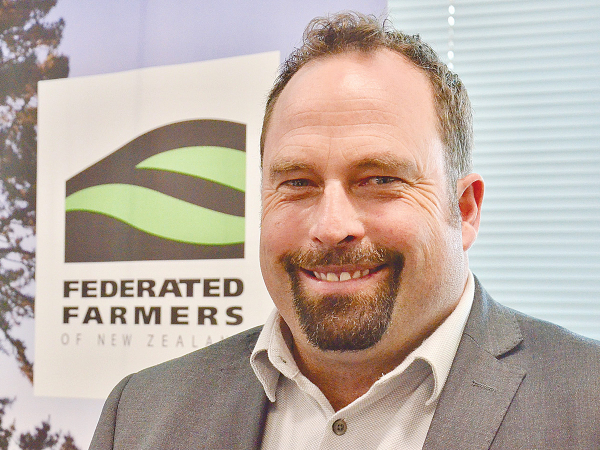 Some farmers are taking on additional work off farm to keep up with rising interest costs, says Federated Farmers dairy chair Richard McIntyre.
Some farmers are taking on additional work off farm to keep up with rising interest costs, says Federated Farmers dairy chair Richard McIntyre.
He points out that while the price of some farm inputs such as nitrogen fertiliser, fuel and palm kernel expeller (PKE) are starting to ease, there is still a lot of stress amongst farmers, particularly those with higher levels of debt.
"Many have come off fixed interest rates and the significantly higher interest payments are really starting to bite," he told Dairy News.
"We are hearing of farmers beginning to take on additional work off farm to keep up with their rising interest costs."
McIntyre warns that any drop in the milk price will exacerbate the problem.
His comments came as economists review their forecast milk price for the season following another drop in Global Dairy Trade (GDT) price index.
Westpac senior agri economist Nathan Penny says there are not clear downside risks to its ambitious 2023-24 milk price forecast of $8.90/kgMS.
"As a result, our forecast is under review," he says.
Penny says the downward price trend is clear and has been sustained much longer than expected, with overall prices falling at 10 of the 14 auctions held this year.
"And overall and whole milk powder (WMP) prices are down 22% and 17% in annual change terms. In contrast, we had expected that prices would have bottomed by now, if not begun to turn higher."
Penny says the chief catalyst for the ongoing price decline is the sluggish Chinese economy.
ANZ agri economist Susan Kilsby believes that prices will not materially increase before a large proportion of the current season's supply is traded.
"What is clear is that consumer demand is being impacted by weaker economic conditions in many regions.
"Most economies are still growing, albeit at a considerably slower pace than normal, which is taking a toll on dairy demand," says Kilsby.
"The softer demand from China is having the largest impact, as China is by far the world's largest importer of dairy products."
Kilsby says the bank is now forwcasting a milk price of $7.75/kgMS for the season, a drop of 50c. Fonterra is forecasting a price range of $7.25 to $8.75 for the season.
McIntyre syas it is concerning to see that banks are reducing their forecast milk price.
However, it's the processors' forecasts and the resulting change to the advance rates that will have the biggest impact, he warns.
Mobile phone coverage and reliability are deteriorating in rural areas, and farming families are bearing the cost, according to a Federated Farmers survey.
Central Otago District Council (CODC) has voted against a plan to spread treated sewage sludge from Cromwell and Alexandra on farmland near Lauder, a decision Federated Farmers says reflects strong opposition from rural residents.
Federated Farmers has called on Central Otago District Council (CODC) to drop or vote down a plan to truck sludge from Alexandra and Cromwell to farmland near Lauder, warning it would compound an "outrageous" situation created by a separate council's decision weeks earlier.
Federated Farmers says new legislation replacing the Resource Management Act will cut red tape, unlock investment and help grow New Zealand's export-led economy, after the Planning Bill and Natural Environment Bill passed their third reading in Parliament yesterday.
Leading figures from the major political parties will be questioned on their primary sector policies at the Rural Issues Debate at Mystery Creek Events Centre, Hamilton, on 30 September.


High country stations, mixed sheep and beef farms, Māori-owned farms, corporates and family operations are among the nine commercial farms taking part in the Livestock Innovation Farming Transformation programme, known as LIFT.
OPINION: New health and safety guidance unveiled by the Government recently provides farmers greater certainty about what is expected of them when managing risks on farm.
The National Animal Welfare Advisory Committee (NAWAC) is seeking public feedback on proposed changes to the Code of Welfare for Rodeos.
A New Zealand initiative supporting farmers to restore the health of grazing landscapes has received international backing through the Regenerative Fund for Nature, a global collaborative fund supporting regenerative agriculture and the communities that produce natural fibres for the fashion industry.
Combine premium New Zealand products, blend in a family ritual and what do you get? A world-class functional drink.
Entries are now open across eleven regions for the 2027 New Zealand Dairy Industry Awards (NZDIA).


OPINION: It seems Canterbury processor Synlait is still in the doldrums.
OPINION: Get offside with New Zealand First leader Winston Peters at your own peril.




