
M.I.A.
OPINION: The previous government spent too much during the Covid-19 pandemic, despite warnings from officials, according to a briefing released by the Treasury.




 increase font size
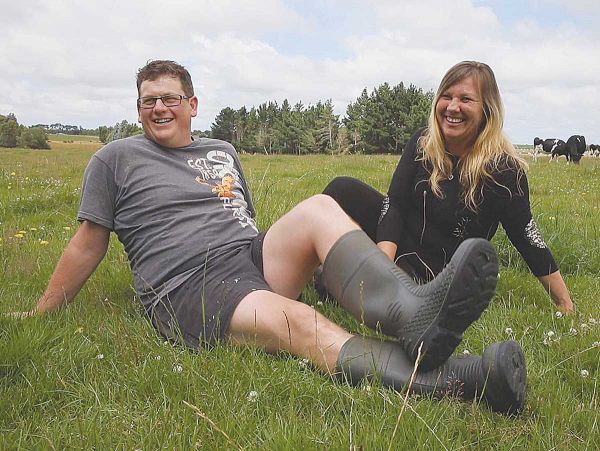 Logan and Melissa Johnson.
A Southland dairy farming couple offering home delivery of both raw and pasteurised milk, as well as other produce, is expanding their business as demand climbs during the COVID-19 lockdown.
Logan and Melissa Johnson have been running their Farm Fresh South business for more than two years, delivering to “quite a few” customers across Southland and as far north as Dunedin.
“We’ve almost doubled our home delivery customers in the last two weeks,” says Logan Johnson.
The family moved to Southland from Motueka in 2009 to take up dairy farming, spending three years in farm assistant and herd manager roles, then five years as contract milkers before getting their own small farm, a few km north of Invercargill, where they have consents to milk up to 50 cows.
Johnson says he is talking to a couple of other farmers about sourcing milk because they can’t keep up with demand.
The business sells milk in glass bottles from vending machines on farm, and delivers throughout the south on a weekly schedule.
They have their own delivery vehicle but also use contractors for the more far-flung areas.
Johnson said a new contractor had just started for some of the Dunedin deliveries as they had too many for one to complete in a day.
While the milk all comes from their own dairy farm, Johnson says he now talking with a couple of other farmers about sourcing milk to meet the demand.
Meanwhile, they have they have progressively added other produce, by teaming up with other local suppliers.
“We’ve got our milk, we’ve got bread from the local baker, Bakers Beyond, we’ve got vegies, honey, eggs and we’ve got meatpacks now as well - Leelands Lamb has come on board.”
They also offer spray-free avocados from a Tauranga grower, after an introduction arranged by one of their customers.
“That’s a wee bit different, because you can’t grow them down here.”
Another addition is a local bulk foods supplier, The Pantry.
Johnson said they have tried to offer as much value and variety as possible but with COVID looming had sped up the process.
“For example, the bread from Bakers Beyond. That started about a week before the lockdown but we had been looking for options for that type of stuff anyway. It just made us do it quicker.
“And Leelands Lamb – we have been talking with them for a while to come on board.”
The Covid-19 emergency hasn’t all been plain sailing. They had been supplying milk to some cafes and retail stores (pasteurised because raw milk can only be sold directly to the end consumer, not through any third party) but Johnson says they lost that trade “overnight.”
Covid-19 precautions include new rules for their onfarm milk vending machines – only one person in the shop at a time, with hand sanitisers available.
Their delivery driver is masked when handling orders and uses hand sanitiser between deliveries, while their website reminds home customers to keep their distance.
“You know we love to say hi and have a chat when we can but we ask that, for the time being, we deliver the milk from a distance. Have your bottles cleaned at in the designated place to be picked up.”
New cleaning schedules are also in place for vehicles and machinery.
The website adds that food safety guidelines mean that anyone with a cold, flu or bug isn’t involved in the harvesting, bottling, or delivery of milk, at all times, not just the present situation.
Johnson said that with everything changing so quickly the main thing for them was to get accurate information about what they could and could not do under COVID-19 restrictions.
“But for us, we have always fallen under the food production essential service; it was just a matter of how we were able to sell it.”
OPINION: The previous government spent too much during the Covid-19 pandemic, despite warnings from officials, according to a briefing released by the Treasury.
Feeding infected milk is high risk for spreading diseases such as M. bovis.
OPINION: Labour leader Chris 'Chippy' Hipkins is carrying on the world-class gaslighting of the nation that he and his cohorts started after their disastrous Covid response; now trying to undermine the Covid inquiry to protect his own backside.
OPINION: Did former PM Jacinda Ardern get fawning reviews for her book?
OPINION: Welcome to the second annual NZ Dairy Expo at Matamata – an event created to bring together the best of the New Zealand dairy industry in a focused, grassroots environment where dairy farmers and rural professionals can meet, talk, compare products, and make smart decisions for their farms.


A major move is about to get underway to improve the quality and viability of dairy beef and cattle in NZ.
Veterinarians say changes to the code of welfare for dairy cattle provides a positive foundation for improved cattle welfare across the country.
Today, 15 October, is the International Day of Rural Women, which recognises rural women’s contribution to farming, communities and the environment.
Global dairy giant Lactalis has integrated its Australian operations with the Mainland Dairy consumer business it acquired from Fonterra earlier this year.
After almost two decades of sharemilking, saving and building equity, Aaron and Marcia Flay this year realised their long-held dream of settling on their first dairy farm.
Good medium to long term prospects for NZ beef, especially in the US, has heighted the focus on various initiatives to capitalise on this situation.



OPINION: It seems Canterbury processor Synlait is still in the doldrums.
OPINION: Get offside with New Zealand First leader Winston Peters at your own peril.




