
Tatua Final Milk Price $12.42/kgMS, Outlook Positive
After delivering another record farmgate milk price to 100 supplying farms, independent milk processor Tatua is entering thee new financial year with a positive outlook.




 increase font size
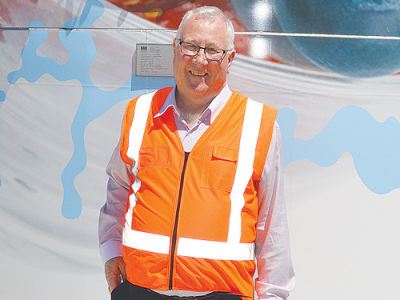 Tatua chief executive Paul McGilvary.
Tatua chief executive Paul McGilvary will step down on January 31, a satisfied man.
McGilvary says his nine-year term as head of the independent processor at Morrinsville has been an enjoyable one; not only has Tatua topped the payout stakes among processors every year, the co-op’s milk supply base has grown from 12 million kgMS to nearly 15.2m kgMS this season.
And importantly, milk quality has been maintained; Tatua suppliers have an average somatic cell count of 130,000 against the industry average of 200,000.
During McGilvary’s tenure, the company has doubled staff numbers from 180 to 370. A new food production facility was added in 2010-11 and a new specialised powders dryer in 2014-15. A $7 million wastewater treatment facility is now under construction.
Tatua also opened two international offices, in Shanghai and the US, to complement its Tatua Japan office. McGilvary says China now accounts for almost 20% of Tatua’s sales, as does Japan. The US accounts for about 12%.
It wasn’t all plain sailing though for McGilvary; in 2014 a blackmailer mixed highly concentrated 1080 poison with baby milk formula and posted packs to dairy co-ops and to Federated Farmers, with a letter demanding the country stop using 1080 or he would release poisoned infant milk powder into the Chinese market and one unspecified market.
Those were challenging times for the dairy companies, says McGilvary.
“We had to assure our customers that we had processes in place to ensure the integrity of our products.”
As part of its response to the 1080 incident, Tatua has spent $1 million on a new security system; it includes a perimeter fence around the factory at Tataunui and controlled entry points throughout the factory.
The DIRA regulation review and an end to 50 million litres of milk supplied by Fonterra was also a challenge, but Tatua suppliers grew their milk supply to offset the loss of DIRA milk.
McGilvary says the co-op has a great working relationship with other dairy processors; it trades raw milk with other independent processors Open Country Dairy and Miraka.
Under McGilvary’s watch Tatua has grown its specialised added value business -- nutritional ingredients like hydrolysates, lactoferrin and phospholipids. It is a key supplier of dairy peptones to global customers; peptones are used in vaccines and probiotics. It is the only casein and lactalbumin peptone manufacturer fully integrated back to the raw material milk source.
Its food service business includes dairy whip catering, cream, sauce and soft serve ice cream. For consumers, it produces whipping cream and cheese sauce.
McGilvary says while Tatua has focused on growing its specialised added value business, its overall performance is the primary reason for its success.
“As a cooperative Tatua focuses hard on wringing the highest performance possible from its capital investments and it has retained money from payouts to ensure it maintains a strong balance sheet to time sales and capture opportunities.
“Customers, farmer suppliers and staff are the heart of Tatua and each of these groups is critical to the company’s performance. I am proud of the relationships we have built and I am sure these will continue to be a strong focus after I leave.”
McGilvary has no immediate plans for the future. He will continue as a director of WEL Networks where he has served for seven years and will look at other opportunities as they arise.
“I have loved every minute of working at Tatua. I consider it a privilege to have led an iconic New Zealand company for nine years.
“All companies need a change at the top periodically to maintain the dynamism necessary for success to continue.”
After delivering another record farmgate milk price to 100 supplying farms, independent milk processor Tatua is entering thee new financial year with a positive outlook.
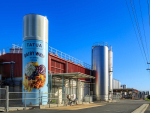
Waikato milk processor Tatua has again declared a record milk payout to farmer shareholders, leaving other processors in the dust.
Tatua chair Stephen Allen says he leaves the co-op with a deep sense of gratitude for the people who have contributed to its success.
Tatua Co-operative Dairy Company has confirmed that chair and director Stephen Allen will retire at the co-operative's annual general meeting (AGM) on 3 December 2026, ending 30 years of service, including more than 20 years as Chair.
Independent Waikato milk processor Tatua has set another new record for conventional farmgate milk price paid to New Zealand farmers.

A New Zealand initiative supporting farmers to restore the health of grazing landscapes has received international backing through the Regenerative Fund for Nature, a global collaborative fund supporting regenerative agriculture and the communities that produce natural fibres for the fashion industry.
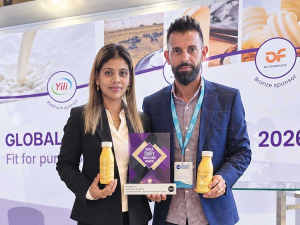
Combine premium New Zealand products, blend in a family ritual and what do you get? A world-class functional drink.
Entries are now open across eleven regions for the 2027 New Zealand Dairy Industry Awards (NZDIA).
Safer Farms is urging farmers to make sure everyone working on farm has safe, suitable footwear for the job.
The Government is backing work on a community-led water storage scheme that could irrigate up to 11,000 more hectares of the Poverty Bay flats, Agriculture Minister Todd McClay says.
Agri-tech company Herd-i has become a new all-region sponsor of the New Zealand Dairy Industry Awards (NZDIA), the largest nationwide celebration of excellence in the dairy sector.

OPINION: It seems Canterbury processor Synlait is still in the doldrums.
OPINION: Get offside with New Zealand First leader Winston Peters at your own peril.




