
Record $10/kgMS milk price forecast means extra cash for Fonterra farmers
A record $10/kgMS opening forecast milk price for the new season means more money into Fonterra farmers pockets early, says Federated Farmers dairy chair Richard McIntyre.




 increase font size
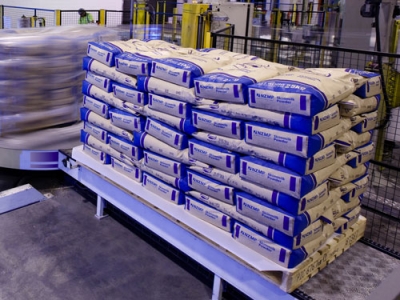 Long-dated contracts on whole milk powder and skim milk powder prices are showing signs of improvement.
Milk payout will improve next season, but cashflow will remain tight on farms, say market analysts.
Long-dated contracts on whole milk powder and skim milk powder prices are showing signs of improvement; BNZ is sticking to its forecast of $6/kgMS for the 2015-16 season; ANZ is predicting a milk price of $5.50-$5.75/kgMS.
Last week, the Global Dairy Trade price index dived 3.6%, its third consecutive drop. WMP prices are down 4.3%, compared to the previous auction, SMP prices down 7.8%.
Fonterra will announce its opening forecast for the new season late next month.
BNZ economist Doug Steel says it’s hard to predict what Fonterra will forecast. “Forecasting international dairy prices in the current market is tough; forecasting what Fonterra’s forecast will be is even tougher,” he told Rural News.
Steel expects Fonterra to base its forecasting payout on forward contracts. He points out that in last week’s auction late dated contracts pricing was encouraging.
For WMP sold in June, Fonterra got $2415/t; however for September 15 contract it got $2478/t and for October 15, $2538/t.
For SMP, Fonterra got about 6% more for contracts sold in September and October.
ANZ economist Con Williams believes SMP and WMP prices will improve in the coming months. Uncertainty over milk production in Europe, where quota restrictions expired on April 1, looms large, he says.
“Right now the world is well stocked with milk and there are questions around supply out of the EU. Buyers are thinking there will be more supply and those who have enough products are adopting a wait and see attitude.”
Williams says increased SMP and butter out of Europe are pushing prices down for those two products. Butter prices dropped 6.6% in last week’s auction.
Williams says the recent dives in dairy prices are not surprising. He predicts 2015-16 will be tougher than this season. “Farmers will be mindful of spending; they will cut back on discretionary and non-compliance spending,” he told Rural News.
Several factors are behind the spate of drops in global dairy prices.
The jury is still out on whether European farmers will produce more milk now that milk quotas have gone.
BNZ economist Doug Steel says the weak Euro is also impacting prices. Six months ago, the Euro was trading at US$1.30; it’s now down to $US1.07, making EU products more competitive on the world market.
China’s economic growth is also slowing and affecting demand for dairy products there. And international grain prices remain low. Steel says this means low input costs for farmers in the northern hemisphere, so “the economics of making milk is cheaper for these farmers”.
A record $10/kgMS opening forecast milk price for the new season means more money into Fonterra farmers pockets early, says Federated Farmers dairy chair Richard McIntyre.

OPINION: It's that time of the year again when milk processors announce their annual results and final milk payout for the previous season.
A record milk payout for this season remains on the cards - but breaking the $10/kgMS ceiling will be a stretch.
New Zealand's fledgling dairy goat industry is in turmoil.
Fonterra farmers are in line to be paid a milk price over $9/kgMS for the first time ever.



Pāmu has released its FY26 Integrated Annual Report, reporting a Net Operating Profit of $113 million, more than double the $49 million recorded in FY25.

Meat Industry Association data, released alongside the Red Meat Sector conference in Wellington, shows export value climbing across the US, China, UK and Canada.
Applications are set to open for the 2027 Zanda McDonald Award, a trans-Tasman award recognised for identifying and fast-tracking talented young leaders in agriculture and agribusiness.
The Royal New Zealand College of General Practitioners (the College) and Hauora Taiwhenua Rural Health Network are calling for investment in a proposed new training pathway for rural GPs, warning that many rural practices are struggling to recruit while a large share of the existing workforce nears retirement.
Federated Farmers has called on Central Otago District Council (CODC) to drop or vote down a plan to truck sludge from Alexandra and Cromwell to farmland near Lauder, warning it would compound an "outrageous" situation created by a separate council's decision weeks earlier.
Synlait has swung to second-half profit as operations stabilise, but the dairy processor still posted a $75.4m annual loss.




OPINION: The same mainstream media muppets that brought you Jacindamania in 2017 have been flat out pimping for the Opportunities…
OPINION: Your old mate reckons the atrocious way farmers in the UK are treated by their lords and masters in…




